Saturday, January 29, 2022

Best Of 2021: Classical


I tried mightily to deliver to your ears the many excellent releases in this category as they came my way, but the deluge got the best of me pretty early on. As is usual in these genre-specific lists, I'll first give you links to what I've previously covered followed by pocket reviews of other albums that helped define my year. Selections from everything that's on Spotify* are included in this playlist or below. That said, I got a new CD player this year and have delighted in rediscovering the impact and expressiveness the format can have - many thanks to all the labels still providing physical promos!


Celebrating 2021: New Year, New Music
Tak Ensemble - Taylor Brook: Star Maker Fragments
Sid Richardson - Borne By A Wind
Susie Ibarra - Talking Gong
Patricia Brennan - Maquishti
Adam Morford & Anne Leilehua Lanzilotti - Yesterday Is Two Days Ago

Record Roundup: Sonic Environments
Mariel Roberts - Armament
Benjamin Louis Brody/Ian Chang - Floating Into Infinity
Angelica Olstad - Transmute

Record Roundup: Chiaroscuro
Akropolis Reed Quintet - Ghost Light
Žibuoklė Martinaitytė - Saudade
Christopher Cerrone - A Natural History of Vacant Lots and The Arching Path

Record Roundup: Song Forms
Will Liverman and Paul Sanchez - Dreams Of A New Day: Songs By Black Composers
Caroline Shaw - Narrow Sea

Record Roundup: Novelty Is Not Enough
Sō Percussion and Friends - Julius Eastman: Stay On It
Kenneth Kirschner & Joseph Branciforte - From The Machine, Vol. 1
Peter Gilbert - Burned Into The Orange
Chris Campbell - Orison

Record Roundup: Enigmas And Excitations
José Luis Hurtado - Parametrical Counterpoint
Rarescale + Scott L. Miller - 05 IX
Douglas Boyce - The Hunt By Night

Record Roundup: On An Island
Alarm Will Sound - Tyshawn Sorey: For George Lewis | Autoschediasms
Michael Compitello - Unsnared Drum
Molly Herron + Science Ficta - Through Lines
Van Stiefel - Spirits
Ning Yu & David Bird - Iron Orchid

Record Roundup: Solos, Duos, Ensembles
Berglind María Tómasdóttir - Ethereality
Wu Man and Kojiro Umezaki - 流芳Flow
The City Of Tomorrow - Blow
Recap - Count To Five 
Borderlands Ensemble - The Space In Which To See
Loadbang - Plays Well With Others
Tak Ensemble - Brandon Lopez: Empty And/Or Church of Plenty
Ensemble Interactivo de La Habana - Studio Session
Nate Wooley - Mutual Aid Music
JACK Quartet - Christopher Otto: rags'ma
Miki Sawada and Brendan Randall-Myers - A Kind Of Mirror
Julia Den Boer - Kermès

Caroline Shaw and Sō Percussion - Let The Soil Play Its Simple Part As I noted in my review, their previous release, Narrow Sea, left me wanting more, and now I have it! Consider this proof of the concept behind that song cycle, which let the Sō percussionists run wild with expressive clicks, clatters, and rhythmic inventions. Except, instead of Dawn Upshaw, it is Shaw herself who sings these 10 art song arrangements of everything from hymns and Joyce to Anne Carson and Abba. Of the latter, I will say that if you're skeptical - as I am - of the genius of the Swedish pop stars, I can at least say that it does not offend in this context. In fact, the album flows beautifully, with Shaw's crystalline soprano connecting all the dots, and ends with a sublime take on Some Bright Morning (also known as I'll Fly Away), which sounds wonderfully ancient and modern all at once.

Adam Roberts - Bell Threads I may be a romantic at heart, but when I see artists like AndPlay, Hannah Lash, the JACK Quartet, and Bearthoven on a portrait album, I like to think of them clamoring to play the music of an exciting composer. For all I know, it's just another gig for them - "work is good," as we used to say in the freelance photo biz - but at least it also serves as a guarantee of quality in the performances! In any case, had I been paying closer attention, I might have remembered Roberts' playful piece for Transient Canvas on their 2017 album, Sift, but I'm not that cool. This is also his second portrait album, with the first coming out on Tzadik in 2014, so I'm even further behind than I thought. But maybe you are, too, so I can only urge you to get to know this colorful, inventive, and versatile composer ASAP - and you might as well start here. 

Whether you drink deeply from the dark and tangled duos for violin and viola (Shift Differential (2011) and Diptych (2019), masterfully played by AndPlay (Maya Bennardo, violin; Hannah Levinson, viola), or get lost in the sparkling web of Lash's harp in Rounds (2017), you will find yourself drawn into Roberts' world as if by a brilliant storyteller. There's also an Oboe Quartet (2016-17), played by the JACK with Erik Behr, that toys with classical form like a cat with twine, and the title piece (2009), a fine solo work for Levinson's viola. The deal-sealer for me, however, was Happy/Angry Music (2017), an angular, ruminative, and ultimately explosive suite of composed almost-jazz - not dissimilar from Sylvie Courvoisier's recent stuff - played with total immersion by Bearthoven (Karl Larson, piano; Matt Evans, percussion; Pat Swoboda, bass). Bell Threads was a wonderful, if belated, introduction to Roberts, now someone for whom my radar is firmly set.

David Fulmer - Sky's Acetylene This piece for flute (Mindy Kaufman), harp (Nancy Allen), percussion (Dan Druckman), piano (Eric Huebner), and double bass (Max Zeugner) has been sitting in the can since 2017, when the New York Philharmonic premiered it as part of their now-defunct Contact! series. The music remains well in advance of its sell-by date, however, a fresh and fascinating exploration of interplay and solo sonorities of the imaginatively assembled forces for 13 dazzling minutes. A chamber work with orchestral sweep. I should pay closer attention to Fulmer, whose Speak Of The Spring was one of the works gracing Michael Nicholas' remarkable Transitions back in 2016.

Michael Pisaro-Liu - Stem Flower Root "Holy shit, that's the most romantic-sounding thing I've ever heard you play!" So said composer Ingrid Laubrock when hearing trumpeter Nate Wooley playing a dress rehearsal of this piece. Commissioned by Wooley as part of his For/With Festival, and composed for b-flat trumpet with a variety of mutes and sine waves, the 30-minute piece has three distinct parts. Laubrock was probably talking about Flower, the middle section, which has a languor one might associate with Chet Baker. In the dense but beautiful essay included in the chapbook that accompanies the project, Pisaro-Liu notes that it is a "symmetrical collection of five arcs or five petals on a flower, with each petal picking up where the previous had left off." The opening and closing sections are meditations on tone, single notes blown through different mutes. The chapbook also has a series of "Anatomies" by Wooley (from whence the Laubrock quote comes), where he writes: "Every time a trumpet is muted, a pathway to a new sonic universe is laid." So true, whether it's Miles Davis playing Someday My Prince Will Come or the incantations Wooley lays down here. This sublime project is the first of the For/With pieces to be recorded - more to come in 2022. While the $7 digital download comes with a PDF of the chapbook, for just another $5 I recommend splurging on the physical book to treat yourself to a more immersive experience. There's something to be said for looking away from a screen from time to time!

Dustin White - Ri Ra Boasting seven world-premiere recordings of 21st century works for C, alto, and bass flute - all inspired by middle eastern traditions - this debut highlights an engaged and adventurous musician. His generosity extends to his website, with ample bios for each composer (Parisa Sabet, Erfan Attarchi, Sami Seif, Imam Habibi, Ata Ghavidel, Wajdi Abou Diab, Katia Makdissi-Warren) and links to their socials. This was especially helpful as all were unfamiliar to me. The album flows nicely, rising to a head on the penultimate track, Diab's The Awiss Dance (2020), based on an ancient rhythm used by Arabian tribesmen to make horses and camels dance. It's a wonderful piece that may have you get up from your seat to match its percussive flair. How often can you say that about a flute album?

Amanda Gookin - Forward Music Project 2.0: In This Skin When I reviewed the first volume in this series focusing on women composers, I remarked I would be on high alert for the next one. Now, that anticipation has been repaid by this new collection, featuring seven pieces commissioned by Gookin to spotlight female empowerment and strength. Many of the pieces use visceral techniques to reflect their rootedness in the body, whether the "everyday erotics" of Alex Temple's Tactile, the three ages of woman reflected in Kamala Sankaram's Belly, or the embodied anger of Shelley Washington's Seething. In addition to Gookin's stunning cello playing, the tracks may feature spoken word, singing, electronics, or bass drum, creating a variety of compelling textures. While Tactile highlights Gookin's own bell-like vocals, Veiled by Niloufar Nourbakhsh uses the voices of Chelsea Loew and Solmaz Badri to pay tribute to the resilience of women who have stood up to Islamic extremism. As on volume one, the inspirations and background stories (Paola Prestini cites the Kavanaugh hearings as fuel for her piece, To Tell A Story) certainly enrich the experience of listening but are not required reading to know that the composers and Gookin are being given free reign of expression and are exploring areas of true passion. All of that comes through in the music, loud and clear. Bring on 3.0!

Gyda Valtÿsdöttir - Ox (also on Limited edition vinyl) On her last album, the Icelandic cellist, composer, singer, and multi-instrumentalist traversed 2,000 years of musical history. On Ox, she focuses on erasing genre, creating a transporting song cycle that touches on ambient, electronic, art-pop, and chamber music. Based on its title alone, Cute Kittens Lick Cream may be the archetypal piece here, embracing an up-to-the-minute languor that should decorate whatever place in which you shelter with gentle colors and gauzy textures. Let it envelop you.

Berglind Maria Tómasdóttir - The Lokkur Project: Music For Lokkur | Lokkur Reworks | Duet When I reviewed Ethereality, Tómasdóttir's "spellbinding" album of flute music earlier in 2021, little did know that I had just been granted a key to a marvelous world of invention and surprise. But I did not hesitate to respond with an enthusiastic "YES" when she offered to send me her next album, which was accompanied by a cassette and a book related to the project. Based on a pair of supposedly ancient Icelandic instruments - which she invented and built - Tómasdóttir has created a lighthearted investigation into national and cultural identity that has also led to some very real and very captivating music. The Lokkur, and its earlier incarnation, the Hrokkur, uses a foot-powered wheel to create a spidery drone on a stringed instruments, which can also be plucked or knocked to create other sounds and manipulate the pitch. Music For Lokkur opens and closes with solos that give an idea of the beguiling possibilities of the instrument.  The four tracks in the middle are compositions by others that also include vocals, making for impressionistic folk songs that could point Björk in some new directions. All are profoundly odd and yet somehow comforting, except for Langlínusamtal viõ fúskara, which has some distorted vocals that I found off-putting. 

The cassette, which includes "reworks" by friends and collaborators including Bergrún Snæbjörnsdóttir, Clint McCallum, Elín Gunnlaugsdóttir, and Erik DeLuca is a gem throughout, however. Each composer was sent a bank of sounds from the Lokkur and Hrokkur and encouraged to let their imaginations run free, creating atmospheric soundscapes that could create an alternate history of minimalism, not to mention electronic and ambient music. An early favorite is Kurt Uenala's Weltraum Rework, which accrues more synthesized details as a Lokkur loop repeats hypnotically, eventually arriving at an abstract groove not far from something by Autechre. 

Finally, there is the book, a beautiful hardcover with an embossed cover and many illustrations, containing a dialogue between Tómasdóttir and her alter ego, Rock River Mary (derived from Berg (rock), Lind (river), Maria (Mary)), in which they spar amusingly about the origins of the Lokkur Project, the challenges of being a woman in academia and the music world, differences between Iceland and America, and many other subjects. The sense of going through the looking glass while reading this delightful book is not unlike how I felt reading Pale Fire by Nabokov. All together, the Lokkur Project reveals Tómasdóttir as an utter original. I will endeavor to be less surprised when she blows my mind again.

Ensemble Dal Niente - confined. speak. The idea that the pandemic has brought with it both challenges and opportunities is by now a near cliché. However, there's no doubt that this flexible Chicago group has met the former and grasped the latter in exemplary fashion. After working up six pieces by composers including Hilda Paredes and George Lewis for livestream performances, they realized they had an album in the making. Featuring works for anywhere from two to 14 performers, the ensemble's versatility is on full display here, along with their brilliance in a variety of modes. From the mysteries of Andile Khulamalo's Beyond Her Mask (2021), which also features soprano Carrie Henneman Shaw, to the sardonic wit of Lewis's Merce And Baby (2012), composed for a John Cage tribute, they run the full gamut. Executive Director and harp genius Ben Melsky gets a starring role in Paredes' Demente Cuerda (2004), while ensemble members Igor Santos and Tomás Gueglio both have new works performed. All is full of color and detail, making for a rich listening experience. Somewhere along the way, Dal Niente also found the time to contribute to New Works From The Virginia Center For Computer Music, which includes more great harp music and throws electronics into the mix. It highlights a robust academic program of which I was previously unaware, yet there's nothing studious about the music, which is consistently absorbing. Their name literally means "from nothing," and it seems nothing can hold them down!

Richard Carr - Over The Ridge Carr is also someone who has used the pandemic fruitfully, taking a break from his usual metier of improvised and electronic music to put pen to paper and write material for string quartet. His rolodex is also impressive as he reached out to violist and composer Caleb Burhans, who assembled an ad hoc group - including cello maven Clarice Jensen - to play it. With violinists Laura Lutzke and Ravenna Lipchik filling out the group, and Carr himself adding violin on five tracks, the sound is full and involving. The result is this gorgeous album, which somehow manages to combine a Medieval stateliness with an earthy naturalism, even drawing in strains of Americana. Four of the pieces have all players improvising based on structures created by Carr. It's testament to their taste and creativity that all the music here, whether scored or improvised, displays the same taste, musicianship, and creativity. A quiet wonder.

Now Ensemble - Sean Friar: Before And After Completed after a three year process of improvisation and collaboration between composer and ensemble, this often has a burnished, pensive quality, with occasional bite from Mark Danciger's electric guitar. There's also a swirling business to some sections, that seems to have a psychological impetus, like a Bernard Herrmann soundtrack for a Hitchcock film. There is, in fact, a programmatic element to the eight-movement work, with Friar calling it "a rumination on the lifespan of civilizations, on our own small place in the larger rhythm of the world." But you will be excused for thinking your own thoughts while listening, or just for admiring the beauty of the sounds and the adventurousness of the artists involved, who also include Logan Coale (bass), Alicia Lee (clarinet), Michael Mizrahi (piano) and Alex Sopp (flute).

John Luther Adams - Arctic Dreams Since it is unlikely that a mere mortal such as I will ever experience listening to "wind harps on the tundra," as Adams did while conceiving of this glorious shimmer of a piece, this album will have to do. Composed for four singers (the superb Synergy Voices) and a string quartet, and enhanced by three-layers of digital delay, the seven movements, each with titles like "Pointed Mountains Scattered All Around," seem to suspend time itself as they assemble in your ears. While individual words rarely register, the texts describe natural Arctic features in the languages of the Iñupiat and Gwich’in peoples of Alaska, adding additional depth to the music. Adams brings a technical rigor and a humbleness before nature to bear here, not unlike the work of his namesake, Ansel Adams, who did the same in his photography. Though the forces are far smaller, Adams' achievement here is equal to epic orchestral works like Become Ocean - massive!

These are far from the only albums in this realm that provided delight and fascination throughout 2021. For more, I urge you to check out my Of Note In 2021: Classical (Archive). To hear what the Recording Academy deemed "of note," give a listen to my handy Classical Grammy Nominations 2022 playlist. And to see what develops this year, please follow Of Note In 2022 (Classical). 

You may also enjoy:

*I am fully aware of the multitude of issues around Spotify, whether their payment structures or their lax approach to content mediation, and am actively researching alternatives.

Sunday, December 26, 2021

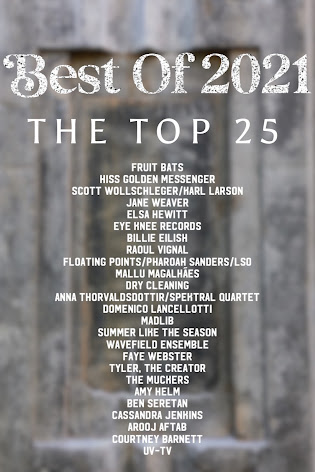
Best Of 2021: The Top 25


As wild a ride as 2020 was, at least it had some kind of trajectory. We were learning to live with a pandemic, taking action to put it in the rearview. We were rallying to the cause of dumping Trump. There were fears and challenges aplenty along the way, but also a narrative to which our storytelling genes could give shape. Then came 2021, with so many neck-snapping reversals for every step forward that any shape the story had would resemble that of the path of a worm chewing its way through wood. 

Fortunately, there was no shortage of new music, including dozens of albums that I leaned on like a crutch. I am filled gratitude once again for all the players, writers, singers, producers, labels, and other elements of this delicate ecosystem who were able to keep going. Still, I worry about some who seem to have dropped away, like Novelty Daughter, Natalie Prass, and Jane Church, and hope they are OK. And while I was glad to see some semblance of a return to concerts and touring, I only attended a handful of shows as I am as yet unable to project myself into an indoor space crowded with my fellow music lovers. It was a privilege to see the shows I attended, all of which were outdoors. 

It's hard to say how the lack of the additional dimension a live performance can provide to a piece of music is affecting my devotion to the artists I follow, but I can only work with what I have. I can be certain that my feelings for the 25 albums below - and the many others I will share in genre-specific lists - are as strong as any other year. I hope you find some measure of comfort, joy, inspiration, validation, energy, and all the things you look for in music in these miraculous releases. 

All of the albums below - except one - were written about in previous posts; click through to read my original review. Listen to selections from all of them in this playlist or below to get the flavor of each release as you explore. While my use of Spotify is certainly fraught with concern about how artists are paid, it has also connected me to music I might never have heard, which I have gone on to support in a myriad of ways. I urge you to do the same should you hear something you love. We need all hands on deck to keep the lifeblood of music flowing!

1. Fruit Bats - The Pet Parade

2. Hiss Golden Messenger - Quietly Blowing It Note: M.C. Taylor also gifted us with a most supremely chill holiday album in O Come All Ye Faithful, featuring gorgeous originals like Hung Fire and Grace alongside covers of everything from Joy To The World and Silent Night to Woody Guthrie's Hanukkah Dance and CCR's As Long As I Can See The Light. The deluxe edition came with a separate disc of dubbed out versions, also available here, that are absorbing, immersive, and some of my favorite music ever from Hiss.  

3. Scott Wollschleger & Karl Larson - Dark Days

4. Jane Weaver - Flock

5. Elsa Hewitt - Lupa

6. Eye Knee Records Note: This is not an album but a series of remarkable singles released by Holly Miranda, Amb. Parsley, and Chris Maxwell's new collective label. Ranging from sweetly hilarious to delicate and from devastating to inspiring, they made for an incredible playlist that became a crucial listen for me. I can't suggest more strongly that you get yourself to their Bandcamp site to buy all these songs and make your own playlist!

7. Billie Eilish - Happier Than Ever Note: Having signed on for a month of Disney+ to watch Get Back, I was thrilled to have the opportunity to watch Happier Than Ever: A Love Letter To Los Angeles, which featured stunning orchestral versions of every song from Eilish's sophomore album. Played by the Los Angeles Philharmonic under the engaged direction of Gustavo Dudamel and with string arrangements by David Campbell, the reworks were exquisitely sensitive to the songs and further convinced me of their elemental strength. I can only hope for an audio-only release of the concert!

8. Raoul Vignal - Years In Marble

9. Floating Points, Pharoah Sanders & The London Symphony Orchestra - Promises

10. Mallu Magalhães - Esperança

11. Dry Cleaning - New Long Leg

12. Spektral Quartet - Anna Thorvaldsdottir: Enigma

13. Domenico Lancellotti - Raio

14. Madlib - Sound Ancestors

15. Summer Like The Season - Hum


18. Tyler, The Creator - Call Me If You Get Lost

19. The Muckers - Endeavor

20. Amy Helm - What The Flood Leaves Behind

21. Ben Seretan - Cicada Waves

22. Cassandra Jenkins - An Overview On Phenomenal Nature

23. Arooj Aftab - Vulture Prince

24. Courtney Barnett - Things Take Time, Take Time My heart sank the first time I listened to this, her third album. Where was the low-slung bass of Bones Sloane and the locked-in drumming of Dave Mudie? Where was Dan Lunscombe to provide guitar and keyboard interplay? Why did she choose to work with Stella Mozgawa from the perpetually underwhelming Warpaint? Now, I knew some of those choices were due to the multiple lockdowns in Australia during the pandemic, but still, I was disappointed with what I was hearing. But two songs grabbed me initially and kept me coming back until the whole album just snapped into place. The first of these was Here's The Thing, the most vulnerable song she's ever recorded, filled with romantic yearning - a color that has been mostly absent from her wonderfully clever songwriting. The second was Turning Green, which has some creative drum machine deployment, meditative keyboards, and builds slowly to a terrific guitar solo, abstract and angular yet restrained. The lyrics reveal a sort-of love song ("You've been around the world/Lookin' for the perfect girl/Turns out she was just livin' down the street) that in its series of missed connections seems never far from current events. Take It Day By Day is the perfect prescription for these times, with a chorus that reminds us never to take the survival of others (or ourselves) in isolation for granted: "Tuesday night, I'm checking in/Just to see how you're going/Are you good? Are you eating?/I'll call you back next week." There's more variety here than on her last album and a bravery to the way she's just putting herself out there, with no attempt to conceal her fears or enervation in the face of all that's gone on these last two years. Also, the stripped back intimacy of the production foregrounds some of Barnett's most well-developed melodies and seems to welcome a personal connection to the record, making it feel like a dispatch from a friend. It's Barnett's best album since her debut. As the title instructs, give it the time it deserves and you just might feel the same.

25. UV-TV - Always Something

You may also enjoy:
Best Of 2020: The Top 25
Best Of 2019: The Top 25
Best Of 2018: The Top 25
Best Of 2017: The Top 25
Best Of 2016: The Top 20
Best Of 15: The Top 20
Best Of 14 (Part 1)
Best Of 14 (Part 2)
Best Of 2013
The Best Of 12: Part One
The Best Of 12: Part Two
The Best Of 11
Best Of Ten
A Blog Is Born: Best Of 2009


Sunday, December 05, 2021

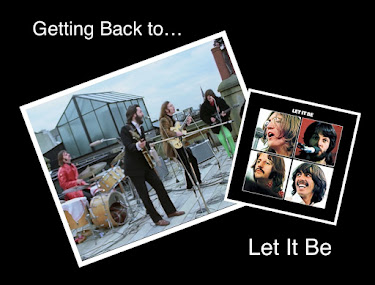
Getting Back To Let It Be

I don't know about you, but between the Get Back documentary and the 50th Anniversary edition of Let It Be, my fall has been dominated by The Beatles. Naturally, I have some thoughts about all of it - read on!

The Beatles: Get Back Documentary Series
The Beatles - Let It Be 50th Anniversary Edition (Super Deluxe)
The more you know, the less you understand. That's the short version of how I felt after reading volume one of Tune In, Mark Lewisohn's minutely detailed biography of The Beatles. That lengthy tome, which takes us through the childhoods of the four lads up to the precipice of Love Me Do's release, is so full of improbable occurrences that it would beggar belief as a work of fiction. 

And so it goes with Peter Jackson's eight-hour-plus documentary series on the making of Let It Be, which is filled with forensic, sometimes phenomenally exciting details, but never fully dispels the mystery of what made The Beatles at their best so good. But it does take a long time to remind you of how spectacularly good they could truly be. 

Part of the hype around this excavation, restoration, reedit, and reevaluation of the 60 hours of footage shot in January 1969, is that it shows a happier period in The Beatles' career than Let It Be, the desultory film created by director Michael Lindsay-Hogg and released in 1970. The truth is, of course, more complicated than that. In Part One, which starts on January 2nd, 1969, they are indeed all smiles, acting as if they have all just come back from holiday when they arrive at Twickenham film studio to begin rehearsals for a return to live performance that will be accompanied by a TV special. 

The good cheer continues as they run through nascent versions of I've Got A Feeling, Don't Let Me Down, Gimme Some Truth, All Things Must Pass, and fragments of other songs old, new, and covers. It's remarkable how carefully they listen to each other and flash enthusiastic smiles from time to time. But there are red flags from the beginning. The studio doesn't sound good to them, they feel exposed in the enormous room, and the live performance is hanging over their heads, necessitating breaks for discussion that circle around and go nowhere. For the viewer, how much this will fascinate is in direct relationship to your passion for The Beatles - and for seeing the sausage get made. 

One misunderstanding I had that was thoroughly cleared up by Part One is the creation of Don't Let Me Down, which I always assumed from listening to bootlegs was presented as this perfect song that Paul tried to muck up with annoying counterpoint vocals. But it was actually that John only had fragments and Paul is trying to goose the song to completion however he can. Before work on it grinds to a halt, there's some interesting discussion about parts of the song being too "corny" or "pretty," with Lennon defending its simplicity. It finally comes down to George to nuke Paul's unnecessary complications, by pointing out that it sounds "awful." But as many versions as we see throughout the series, the leap to an indelible masterpiece is never quite seen. Either it was off camera or it was just unspoken.

The most serious issue, of course, is George's discontentment in his own role, both at playing third wheel to one of the greatest songwriting duos in history, and to feeling technically inadequate to this method of trying to gin up songs in real time. He recognizes his limitations around improvisation, unfavorably comparing himself to Eric Clapton, which leads Paul to say: "But that's jazz." They're clearly not communicating. 

There's also this earlier nugget from George: "It should be where if you write a song I feel as though I wrote it. And vice versa...That was the good thing about the last album. It's the only album, so far, I tried to get involved with." And Paul just says: "Yeah."

Eventually George walks out and Part One ends in disillusion and near dissolution. But there are amazing moments, such as when, on the morning of January 7th 1969, when John is late,  and Paul, clearly frustrated at their slow progress, starts strumming on his Hofner bass, rocking back and forth like he's possessed. The best word for what happens next is a conjuring, as he draws the basic structure of Get Back out of his soul. Ringo and George look on, with the latter saying, "It's good, you know, musically, its great." He starts working out a part, and Ringo starts singing backup vocals, before taking up the drums, and soon all three of them are grooving together. Jaw-dropping stuff. 

Michael Lindsay-Hogg, for all his apparent skill at camera placement and coordination, is full of terrible ideas about the performance ("How about an orphanage?") and seems unable to read the room throughout. He even manages to get in a brief pissing match with Linda Eastman (McCartney) about who is the bigger fan of the Fab Four.  But he manages to get them all set up when, in Part Two, they move to the smaller confines of their new studio in the Apple building. Even with George back in the fold, this and parts of Part Three are a bit of an endurance trial, as you watch them simultaneously create the songs loved by generations - and attempt to murder them in their cribs by performing them in every style of parody you can imagine. Even this lover of their Christmas singles had his patience tested from time to time, but I guess performing Two Of Us as clenched-jaw ventriloquists is what John and Paul needed to do to re-cement their bond!

The ultimate payoff is hinted at when Billy Preston, whom they had known since their Hamburg days - and whom George had rhapsodized about in Part One - drops by for a meet and greet and essentially ends up joining the band for the remainder of the sessions. The sheer musical skill of Preston is astonishing as he just sits down at either a Rhodes electric piano or a Lowry organ and instantly plays parts that are nearly ones we hear on the final versions - and always with great exuberance and enthusiasm.

I also delighted in observing John's love affair with his Fender VI, a six-string bass that he plays on several songs, including The Long And Winding Road, when Paul is occupied by piano. He's often seen cross-legged on the floor, gently caressing notes out of the instrument. Yoko, whom I should have mentioned earlier, shows no signs of jealousy, but is rather content to sit and listen. She does show enthusiasm for some of the songs, especially as they come together more, and at times is seen in animated conversation with Linda - a beautiful sight.

In Parts Two and Three, there are flashes of musical perfection, master takes, even, evincing that unique and beautiful sensation of pure harmony between four people (or five, counting Billy) but it's not until the live performance finally takes place that we get an uncut (well, mostly) dose of Beatles magic. All that talk finally led to them making their way up to the roof of Apple for that famous last concert, although there was last-minute hesitation about even that. Lindsay-Hogg's skills come to the fore as he sets up ten cameras - five on the roof itself - and prepares to capture this historic moment. 

Not having performed live in three years, the four Beatles show some jitters - and also some worries about the roof's stability, but finally take their places, and run through a quick and ragged soundcheck of Get Back, getting the attention of their impromptu audience on the street. Then, with less than 50 minutes left to go in the series, they count off the first full performance of Get Back heard in public and it's...OK. But you can sense their true power coming back - and they feel it, too, exchanging glances, looking cool, smiling at each other. Then they do it one more time and...LIFTOFF. John executes his intricate rhythm and lead parts with panache, Billy's fingers dance on the keys, George strums along, easy breezy, and Paul is finally fully feeling himself, interjecting little whoops and hollers and finding the parts of the song to push his voice. Cut to Maureen Starkey bobbing her head hard, like I would have been. 

Then, they launch into Don't Let Me Down, with John and Paul harmonizing beautifully, and, even with a bit of gibberish from John, it is glorious. But it's when they kick right into I've Got A Feeling that it dawns on you: they could have done this more than once. They could have taken this on the road! It would have been one of the greatest tours in history, of that I have no doubt. Of course, if that had happened, we might not have gotten Abbey Road, which is a tough trade-off for posterity to accept. 

Throughout this magnum opus, Jackson makes almost only good choices. There are a few uncomfortable moments, such as when he overlays footage of The Beatles in their touring pomp as they blow through a version of Chuck Berry's Rock And Roll Music at Twickenham. Nice try. One could also complain about the highly fragmented approach to the rooftop concert, with all of its split screens and many cuts to the people in the street and the Bobbies sent to inquire about the noise. This is part of the story, yes, but it also dilutes the sheer brilliance of what the Fabs are doing. But, damn, nothing can keep us from the ultimate bliss of John delivering the loving and joyous version of I Dig A Pony that appears on the Let It Be album, screwing up his face in pleasure at George's perfect guitar solo, which firmly beats Clapton at his own game. You really can syndicate every boat you row, after all!

Of course, we've seen much of this before, in the original Let It Be film and on YouTube, but it's never looked as good, with Jackson's technical wizardry making both sound and vision pop with crystal clarity. We also owe Jackson a debt of gratitude for organizing the trajectory of what would eventually become their final release. The calendar graphic is highly effective at keeping us rooted in the timeline. The time at Twickenham, painful as some of it is, has never been so well-explicated. Bootlegs tell only part of the story, and Lewisohn himself elides most of it in his classic book, The Beatles: Recording Sessions, only picking up the story in full when they come to Apple. Jackson also does a great job highlighting some of the people around The Beatles, like Mal Evans, their indefatigable "road manager," who is as patient with a pen to take down lyrics as he is sourcing an anvil for early takes of Maxwell's Silver Hammer.

As a three-part series, Get Back lacks the shapeliness of a great documentary film, and, with each part well over two hours, even the gripping structure of a good docu-series. But it puts you in the shoes (and occasionally flamboyant boots) of The Beatles as they struggle through harmony and dissonance and unity and disarray. While not all sunshine and flowers, it is a more nuanced look at this time in The Beatles career than Lindsay-Hogg's dour original, and is a highly valuable project for that reason alone. If you are any kind of a fan of the band, or curious about the creative process and the pitfalls and power of collaboration, it is well worth paying for at least a month of Disney+ to immerse yourself in this shaggy tale. 

The Super Deluxe box set, on the other hand, is a typical Beatles product in that it seeks to organize and sculpt things a bit more than Jackson's lengthy project would allow. But this does make for good listening, as the two discs (in CD terms) of jams, rehearsals, and sessions, bear repeat plays and decently summarize all the ins and outs of making Let It Be. Whether by choice or due to contractual arrangements with Disney, we do not get the complete audio of the rooftop concert or even a hint of some of the intriguing offshoots of the Twickenham work, such as a jam with moments of hushed majesty called The Palace Of The King Of The Birds, a segment of which is heard over the end credits of Part One. The bootlegs are not yet obsolete.

The set also includes Glyn Johns' May 1969 assembly of an album called Get Back, which was his first attempt to make sense of all that happened that January. In a recent issue of Mojo, he relayed that when presented with this mix, The Beatles "...all came back the next day and said, to a man, 'fuck off.' They hated it." And they were right. Hearing it here, and knowing what gold was also on the tapes, one questions Johns' sanity or at least his hearing. Sure, giving us The Beatles "warts and all" is an interesting concept, but he seems to purposely choose takes that are just this side of good, much less great. They had master takes that he simply ignored for the sake of a principle! 

Johns also made an assembly of Get Back in January 1970, which as I understand it, was pressed onto acetate and sent to radio stations as an advance of The Beatles next album. Was that one any better? Not by much, since it used the same takes of the songs the two have in common. At least it eliminated Paul's Teddy Boy, which I find irritating in any version, and included George's I Me Mine, was recorded on January 3rd, 1970, the last time more than two Beatles were in the studio (John was absent) until the "Threetles" sessions for The Beatles Anthology in 1994. We get to hear that version of I Me Mine (all 1:45 of it) on an EP that fills out the box with new mixes of the single versions of Don't Let Me Down and Let It Be, both of which sound fine but don't further illuminate already magnificent songs. I also question the need to have 30 seconds of dialog precede Don't Let Me Down, which is not part of the original single release. If you want one of Lennon's best songs as he intended, you've still got to get the Mono Masters set or Past Masters Vol. 2 - or track down the original 45.

But what of Let It Be, the LP finally released on May 8th, 1970, and which all of this pomp purportedly celebrates? While not included in Get Back, most people are familiar with its final stages, when John and George surprised everyone by reviving the project and handing the tapes over to Phil Spector. John and George were highly enamored of the producer, even if his best days were behind him, both working with him on large swaths of solo material. The results created the only Beatles album with an asterisk, with everyone from fans and critics to Paul himself questioning many of Spector's choices. According to Lewisohn, Paul even accused the other Beatles in High Court of seeking to "ruin his personal reputation" with the orchestrated version of The Long And Winding Road.

In 2003, Paul produced his terribly titled rejoinder, Let It Be...Naked, which sought to right some of the perceived wrongs by stripping away the Spectorization and selecting different takes and edits in some cases. It was a good, if somewhat airless, alternate approach, with Let It Be and I Me Mine being the most satisfying beneficiaries of the treatment. The Long And Winding Road, sorry to say, still felt like it lacked something, and in the Get Back documentary Paul is seen discussing adding strings and other embellishments. 

But how bad is Let It Be, with "bad" being a relative term, as this is still The Beatles, after all? As a five-year old, it was just another album by my family's favorite band. While I recognized a certain different texture due to the orchestrations - the heaviest on a Beatles album since Goodnight - it still brought great joy. Listening now to my 51-year-old copy, which is in decent shape, I can take new delight in Two Of Us, now having the visual of John and Paul, face to face with their acoustics, while George, off to the side, does his country licks in place of a bass line. It's just a tremendously moving song and Spector does nothing to interfere with it or I Dig A Pony's awesome rooftop performance. I actually love the false start, which Paul saw fit to remove. Across The Universe now sounds a little more out of place, so firmly am I aware of its 1968 provenance. I like the "Wildlife" version better - best presented on the Mono Masters collection - and also agree with David Bowie that a more acerbic treatment was required.

I Me Mine is the first song with Spector's new material added, and the brass, strings, and choir sound bolted on and just plain unnecessary. His edit to extend the song works perfectly, however, making for a more satisfying listen in that regard. Let It Be also gets the full treatment and works better as the song itself attracts that kind of grandeur. John's Fender VI feels a little exaggerated but Ringo's drums have a nice clarity. Sonically, the orchestra lacks the depth of the one on Goodnight, perhaps pushing the limits of 1970's technology. Fifty seconds of Dig It and 40 of Maggie Mae are the perfect reminders of the playful atmosphere of parts of the sessions. Unlike Paul, I wouldn't want my Let It Be without them.

Side two kicks off with those ringing guitars of I've Got A Feeling, and once again I can connect to the recording, on the rooftop, with the glances between John and Paul easily recalled as they exchange lines. It's a great performance, too, with a low-end throb and George ripping off those tense leads with authority. One After 909 is a fine romp from the rooftop and sounds as fun as it looked. The Long And Winding Road, seen as too maudlin, attracts controversy as a song apart from Spector's work, but I think there's a fine melody in there, a beautifully restrained vocal from Paul, and now I have the added visual of the band in the studio to light my way through the morass. The strings, etc., are indeed a bridge too far, overwhelming not only Ringo's sensitive drumming but Paul's vocals, two tracks of which Spector erased to make room for more glop. 

In Get Back, we see them open up a box and pull out a cute little lap steel guitar. Picturing John playing it like a kid with a new toy only adds to the charms of For You Blue ("Go, Johnny, go!" George interjects during his overdubbed vocals). Get Back, a studio recording with rooftop dialog added by Spector, sounds fantastic, and knowing how many takes it took to get from Paul's Twickenham fever dream to this only makes it seem more remarkable. As predicted, I'm bobbing my head just like Maureen. A perfect ending to an imperfect album.

Some of the issues described above were helped slightly by the 2009 remaster, which added clarity without doing much more. Now, we have a wholly new mix by George Martin's son, Giles, who has previously worked wonders with Sgt. Peppers and the White Album (not so much with Abbey Road). Martin the younger sought to find the best of both worlds, respecting the original 1970 release while endeavoring to integrate all the disparate elements, whether the old recording of Across The Universe, or Spector's after-work. And guess what? It works a treat! That touch of grandiosity now elevates I Me Mine instead of swamping it. Let It Be takes you to church, George's overdubbed solo slicing through with a new physicality, John's bass anchoring everything, and Ringo's creativity shining bright. Even The Long And Winding Road goes down more smoothly, with Paul's voice having more presence and George's guitar, played through a Leslie amp for that watery sound, actually there at all. Is it a great recording? Maybe not, but it's easier to judge it for what it is than thinking about its constituent parts. Across The Universe still feels a little out of place, but that's more due to its instrumentation than the recording.

Over all, the album sounds terrifically well balanced, with renewed clarity and weight and Martin's work confirms Spector's skill at record-making. All of the dialog and scattershot bits make sense and give Let It Be the feel of a real album, as opposed to Johns' proposed Get Back sound collages. So, what is the poor consumer to do after all of this? If you can afford it, by all means get the Super Deluxe set on vinyl ($130) or CD ($115), although the book, which is supposed to be great, is likely more impressive in the former package. The Glyn Johns Get Back is packaged to look like an official album, making for a cool object, but it's not likely you will play it often. For most people, cutting to the chase and getting the new version of Let It Be on vinyl will be enormously satisfying, especially if you don't already have it in an earlier version. If you stream, you can find all of the material there as well.

Having watched the documentary and listened to everything that's now been officially released, I find myself marveling anew at what these four complex, flawed individuals were able to create and achieve. While the Get Back/Let It Be project was more seat-of-the-pants than anything they had done before - even the debut album was rehearsed for months on stage before they laid it down in one session - I've listened to enough bootlegs (and the Anthology volumes) to know that artistic greatness was never guaranteed when they started recording. It was their attention to detail, their hunger for success and perfection, and that indefinable fifth element that was created by the four of them together that made The Beatles so unique and enduring. And no amount of information overload will change that.

You may also enjoy: 
The Book Of Fab
The Beatles Thing
One, Two, Three, Four, Cough


Wednesday, November 17, 2021

[Video Premiere] Phong Tran: High Tech, High Emotion

On 2017's Initiate, Phong Tran imbued software with high drama and emotion, inspired by “the story in every story” theorized by Joseph Campbell in The Hero With A Thousand Faces. The album also announced an electronic musician with vision, work he has continued with MEDIAQUEER, his synth and violin duo with Darian Donovan Thomas. The duo has also collaborated on visual art, most notably the mind-bending video for Sō Percussion's online performance of Julius Eastman's Stay On It.

Now, comes the release of Tran's second full-length album, The Computer Room, out November 19th on New Amsterdam. Once again applying a thoughtful approach, Tran uses a variety of vintage synths and the occasional snippet of a YouTube clip about simulation theory to pay tribute to his youthful engagement with video games and the virtual spaces to which they gave him entry. It was there that he found the supportive community he needed, one that would only be replicated IRL when he moved to New York and found a group of simpatico fellow artists. 

While sometimes viewed with suspicion, for someone growing up in isolation games on the internet might give them their first sense of being valued for who they are. As Tran puts it, "The Computer Room is also a thank you to the internet community of my youth, the friends who pushed me to get better at something, even if it was playing computer games. Because if I didn’t push myself then, I wouldn’t be pushing myself now with my creative work.” There's also an eerie quality to some of The Computer Room, as Tran limns abandoned virtual spaces with sound, like electronic fireflies showing you the way through your childhood bedroom.

The result is a glorious series of electronic soundscapes, each one building a virtual space of their own and further proving the universal emotional impact of melodic sequences and rhythmic structures. Even if your experience with computer games is limited (as is mine - I was more of a Tetris freak), you will find your own place in these sounds. Unsurprisingly for a multi-threat talent like Tran, The Computer Room also has an equally strong visual component, with the peer2peer x Party Quest video below the perfect introduction to the project.

Opening with the doomy overture of peer2peer, the video shows some kind of technology emerging from the shadows, a sculptural piece of equipment that invites you to engage with it if you dare. Smash cut to Party Quest, the playful sounds illustrating an exploration of a 3D vector animation of a mountain range, the kind of environment you can imagine exploring with a hardy band of virtual companions as good seeks to conquer evil. There are fiery obstacles and random weapons appearing like power-ups, but all remains abstract. For the last minute, it seems the game is over for now, as the melodic material becomes full of the melancholy you feel when an absorbing, affirming activity comes to an end, with hopes to revisit it soon.

Watch peer2peer x Party Quest below and buy The Computer Room, or stream it everywhere, on 11/19. And if you're looking for a gift for a special person in your life - or for yourself - check out the Collector's Edition Box Set, which includes an art book of visuals for the album along with a physical CD and download code, all housed inside of a 2000's-era inspired software box. Edition of 25 so don't hesitate!


You may also enjoy:
Record Roundup: Novelty Is Not Enough
Record Roundup: On The Cutting Edge

Tuesday, November 02, 2021

Record Roundup: Solos, Duos, Ensembles

We are officially in the fourth quarter of 2021, which means all the albums I have yet to tell you about are starting to weigh heavily upon me. Here's an attempt to catch you up with some next-level new music releases featuring solo players, duos, and ensembles. Get comfy!

Note: feel free to press play on this playlist, which has selections from eight of the albums below.

Berglind María Tómasdóttir - Ethereality Icelandic flutist and multidisciplinary artist Tómasdóttir opens her latest album in quietly spectacular fashion, with Carolyn Chen's mysterious Stomachs Of Ravens (2018). An exploration of the flute's breathier tones, it has a rhythm that darts here and there, then stretches out, creating an abstract narrative. The recording is as superb as Tómasdóttir's technique, which is true for the whole album, including the folkish charms of Tryggvi M. Baldvinsson's Riposo (2015) and Anna Thorvaldsdottir's title track, composed in 2011. The latter makes stunning use of extended techniques, making for some startling noises amidst a wide dynamic range. It's an epic in 6:21 and, as this is the premiere - and only - recording, it will likely stand as definitive. The same can be said for Clint McCallum's Shut Open (2021), which arises from bass notes to a suspended, silvery cloud of sound, like the soundtrack for an as-yet-unwritten creation myth. In a word: spellbinding!

Wu Man and Kojiro Umezaki - 流芳Flow In 2014, I raved about Umezaki's (Cycles), praising it as the most complete picture to date of this master of the shakuhachi, the Japanese flute. I looked forward to more and now, seven years later, I finally have it in this gorgeous collaboration with Wu Man, as much as virtuoso on the pipa (a Chinese lute) as Umezaki is on his instrument. A series of solo and duo compositions/improvisations inspired by the classical Chinese garden at the Huntington museum near Los Angeles, and drawing on their deep experience of both folk and contemporary traditions, these gentle and spare pieces will transport you there - or wherever you let your imagination take you. 

The City Of Tomorrow - Blow The three works here serve as both an introduction to this pioneering wind quartet and as a justification for the role of such an ensemble in contemporary music. The centerpiece is a world premiere recording of Hannah Lash's Leander and Hero (2015), an episodic series of nine short movements, which uses the Greek myth of lovers kept apart by an apocalyptic storm to bring the climate crisis down to the level of individuals trying to survive on the planet. But there's nothing didactic or obvious about the music, which is consistently fascinating as it pulls you through the story. Blow, Franco Donatoni's piece from 1989, opens the album and dazzles in its layering of the instruments, with muted horns backing up swirling flute and oboe with three-dimensional effect. The final piece is Esa-Pekka Salonen's Memoria (2003) and, while it meanders a bit, the assured ensemble writing lets these remarkable players revel in the tones and textures of their instruments - you will, too.

Recap - Count To Five There is every kind of struck object on this fantastic debut from a new percussion quartet, resulting in a kaleidoscopic array of sounds. Angelica Negron's title track, which includes the crackles and thwaps of found instruments, opens the album with a ritual flair as it interpolates fragments of what sound like field recordings. The ceremony continues with the bongos and side drums of Hammers by Alison Loggins-Hull, which finds the drums chasing Tiahna Sterling's flute in a merry dance. Ellen Reid's Fear | Release introduces bells into the equation, with playful trills and a stop-start bass drum pattern that gains inevitability as the piece goes on. It's delightful and unsettling all at once. Equally arresting is Hedera by Lesley Flannigan, who first caught my attention when she opened for Tristan Perich a few years ago. With rumbling drums and the composer singing long held notes, it maintains a level of intrigue for a full 20 minutes. As the layers of voices accumulate, it becomes ever more a mournful balm for our times, both comforting and acknowledging how hard things can be. New music from Mary Kouyoumdjian is always welcome and Children Of Conflict: Samar's Song is among her most powerful works. Andie Tanning's violin soars elegiacally over pensive eighth notes, a dramatic meditation on loss and tragedy. Caroline Shaw's arrangement of the 1897 hymn, Will There Be Any Stars In My Crown, with the composer's clear soprano and Recap joined by Transit New Music, sounds both luxurious and spare, like a Shaker table made of rich mahogany. It strikes the perfect note of hope and strength to end a masterfully sequenced collection. I would be remiss if I didn't note that all the members of Recap are BIPOC females, not the most common thing in this space, and all the composers are women. But this band needs no special pleading to get on your radar and on your repeat playlist.

Borderlands Ensemble - The Space In Which To See Opening an album with a world-premiere recording of a piece by Anne Leilehua Lanzilotti is a sure way to grab me. Her title piece (2019), four short movements setting a poem by Layli Long Soldier, an Oglala Lakota, is equally rigorous and dramatic, with a dark undertow that is one of her signatures. Like many of the pieces here, it also foregrounds the horn of co-founder Johanna Lundy, who plays with a creamy tone that breathes marvelous life into Jay Vosk's Passing Ships (2019), which seeks to depict human migration in melancholic fashion. Part of the Borderlands brief is to connect the culture of their home base, Tucson, Arizona to that of Mexico, which bears remarkable fruit in Ometéotl (2019), in which Alejandro Vera pays homage to the Aztec god of creation. With tense strings and a dialog between Lundy's discursive horn and the terse guitar of Dr. José Luis Puerta, it has a careful solemnity that seems to be holding back the forces of nature. There are more delights on this well-curated debut, including stylish adaptations of Mexican folk songs, and I urge you to explore the whole landscape.

Loadbang - Plays Well With Others I've been on the fence about this quartet, perhaps due to their unusual combination of trumpet, trombone, bass clarinet, and baritone voice, but in the grand tradition of Charlie Parker and Clifford Brown's "With Strings" albums, adding a string orchestra has been just the ticket for me to find entry. That's not to say that there isn't still a profound weirdness to what's going on here. For example, there's Heather Stebbins' Riven (2020), which has singer Jeff Gavett moaning incoherently, something making insect noises, plops, clicks, and occasional notes from the trumpet (Andy Kozar), trombone (William Lang), and clarinet (Adrian Sandi), and the strings (conducted by Eduardo Leandro) gradually ramping up the tension to the breaking point. It's a wild ride, equally appropriate for an Italian giallo soundtrack as the concert hall. Eve Beglarian's You See Where This Is Going (2019) is a close enough setting of a poem by Brandon Constantine to be a distant cousin of Benjamin Britten's Serenade for Tenor, Horn, and Strings, with marvelous pizzicato strings and Gavett outdoing himself at the top of his range. Reiko Füting and Taylor Brook also contribute pieces of baffling originality, and Scott Wollschleger's CVS may be his most mind-boggling piece yet - you'll never look at that drugstore chain the same way - with the three of them finding a home somewhere in the region of Scott Walker's later albums. Finally, with any last shred of provincialism scoured away, Paula Matthusen's Such Is Now The Necessity delivers a dose of lush beauty. Bold stuff - and consider me knocked off that fence into Loadbang territory. P.S. SCARY-good string section, too, with members of JACK, Wet Ink, Talea, AndPlay, and other notable groups joining in. Note: catch Gavett at the Americas Society on November 5th, performing a Taylor Brook world premiere with Yarn/Wire - should be a heckuva night. Details here.

Tak Ensemble - Brandon Lopez: Empty And/Or Church of Plenty This new release on the cassette label Tripticks finds one of our most esteemed groups collaborating with Lopez, a bassist and composer. While Tak commissioned the piece, the final result arose from more of a dialog between composer and musicians rather than the handing over of a score to place. Lopez joins the ensemble adding a dark, droning bottom end for them to react to, triggering some otherworldly skirling from violinist Marina Kifferstein on Side A and a great clatter of brushes from percussionist Ellery Trafford on Side B. Both sides make for compelling listening, but you get more of a feel of the full group on Side B, with vocalist Charlotte Mundy letting it rip along with Madison Greenstone's Clarinet and Laura Cocks' flute. The last few minutes is wonderfully bonkers. And don't worry, you can stream the tracks on Bandcamp so you don't have to get your cassette deck out of storage. I, for one, couldn't live without mine and enjoy buying cassettes as convenient physical artifacts that cost less than new vinyl - and I play them, too, of course!

Ensemble Interactivo de La Habana - Studio Session Sure, I love the Buena Vista Social Club as much as the next person, but I fear we have been ignoring contemporary Cuban music at our peril. Now, amongst all their other activities, Tak Ensemble has also done the public service of releasing an immersive debut from this Cuban collective on their Tak Editions label. Consisting of one 41-minute continuous track, while rooted in improvisation nevertheless transits through moods and sonic universes that gain inevitability with each repeat listen. Call them movements if you must, but that would just take away from the fluidity that arose when seven years of work by, performing at street fairs and festivals of the avant garde, finally came to fruition in the studio for nine musicians, including percussion, vocals, flute, and more. I'm sure it was deeply satisfying experience for them and that translates fully to the listener. 

Nate Wooley - Mutual Aid Music Picture the scene: Eight of the finest musicians from the realms of new music and contemporary jazz gather at the redoubtable Oktaven Audio and over the course of single day record eight pieces, each about ten minutes long, using a combination of notation, graphic scores, and instructions for improvisation. On top of that, the players - assembled by trumpeter/composer Wooley - are to question "what they add to the ensemble as human beings first and musicians second." Challenging? Maybe for some, but for Ingrid Laubrock (sax), Joshua Modney (violin), Mariel Roberts (cello), Sylvie Courvoisier and Cory Smythe (pianos), Matt Moran (vibraphone), and Russell Greenberg (vibraphone and percussion), this is their bread and butter. Each piece, which traverses a range from the delicate and starlit to the knotty and provocative, has its own character and occupies the center of a Venn diagram where the chamber music and jazz of the 21st century meet and greedily absorb the best qualities of each other. Wooley has been developing the form and philosophy of Mutual Aid Music since 2014 and this album is quite the proof of concept. While the high-minded ideals of "community action and the human drive to provide succor to our fellow humans" are wonderful, even better is just sinking into the expressive wonders of these pieces, marveling at the bravery and generosity of these incredible musicians to try new ways of creative collaboration.

JACK Quartet - Christopher Otto: rags'ma As on another Greyfade release I reviewed earlier this year, there is a lot of verbiage and theorizing behind this compositional debut from Otto, a founding member of JACK. I encourage you to read all of it as you can learn a ton about just intonation and what motivates someone to compose. Or you could just order the album and trust me when I say it sounds like little else written for string quartet. A series of slowly moving transitions played by either two or three quartets overdubbed atop each other, the sound is meditative but multidimensional, at times sounding like nothing other than a prop plane - or two - lazily traversing a summer sky. This might not be for you if you're an impatient listener, but if you can get behind some radical minimalism, look no further.

Miki Sawada and Brendan Randall-Myers - A Kind Of Mirror This collaboration between pianist Sawada and composer/sound-designer Randall-Myers began life as a performance piece thattoured throughout West Virginia that offered an experience (apparently) equal parts Marina Abramovic and Mr. Rogers. But that show only included two movements, which they then expanded to five and have now recorded for Slashsound. The question of whether the visuals are needed is answered in the first minutes of Shadow as a drone gives way to crystalline piano, developing into an extravagantly beautiful piece that gradually becomes nearly overwhelming. Bloom continues that vibe, betraying Sawada and Randall-Myers' shared love of long-distance running. You will be breathless. Then comes Echo, with single notes following each other like raindrops on a window pane. The audio processing gradually adds artificial resonances, creating an enhanced piano of the mind. Mirror presents calming chords surrounded by electronic clouds of sound that gradually overtake the soundscape before leading to the dazzling arpeggios of Cascade, the final track, which delivers the thrills of hitting that final mile of a marathon and discovering it's all downhill. Note: Get to the Public Theater on November 23rd for the album release show!

Julia Den Boer - Kermès Last year, I praised Den Boer's solo piano debut, Lineage, for its "sparkling and contemplative" nature and for its smart curation of four Canadian composers. I also called it a "go-to "morning album" - and, what do you know, she's gone and done it again - with only one Canadian this time. Featuring works by Giulia Lorusso (Italy), Linda Catlin Smith (Toronto, via NY), Anna Thorvaldsdottir (Iceland), and Rebecca Saunders (London), she's gathered together pieces that work well together, with enough contrast to avoid monotony, but also enough shared resonance to make for a complete whole. She's also received the deluxe recording treatment from Oktaven Audio so you can hear her sublime control of dynamics with even more clarity than on Lineage. It was also a coup to feature the first studio recording of Thorvaldsdottir's Reminiscence, a 2017 piece premiered in 2020 by Justin Krawitz. It's an almost skeletal work, held together only by Den Boer's deft pedal work, and seems to explore a world of deep interiority and features some sonic touches that will expand your idea of what the piano can do. This wonderful collection continues the establishment of Den Boer as one of the finest pianists working in new music.

You may also enjoy: 

Saturday, October 16, 2021

Record Roundup: Plugged In

Electricity has been a driving force in music at least since Leon Theremin developed his pioneering instrument over a century ago. So here's a collection of recent records that all rely on alternating currents, starting with more abstract efforts and ramping up to something more visceral. 

Matt Evans - Touchless Sonically, this is quite a different vibe from the percussion-based soundscapes on New Topographics, Evans' brilliant 2020 album. But as he helpfully points out, the methodology - a blend of electronics, field recordings, and acoustic instruments - remains the same, it's just the emotions being limned here are a world away from the more philosophical ideas being explored there. Specifically, Evans fearlessly delves into the realms of grief and loss he has had to live in since his partner, artist Devra Freelander, was tragically killed in a biking accident, arriving at a series of semi-ambient tracks that strand us on an arctic permafrost for much of the album. But when you listen deeper and hear the contribution of "practice room piano" - such a deeply human sound - along with Tristan Kasten-Krause's upright bass, David Lackner's sax, and Elori Saxl's violin, things warm up quite a bit. Contemplative, melancholy, and seamlessly presented, Touchless further expands on Evans' overall project and may give others succor in their own moments of sorrow. As with New Topographics, the artwork is by Freelander and reflects yet another facet of her multifarious talents.

Luce Celestiale - Discepolato Nella Nuova Era This is a debut from a duo made up of Andalusian painter Lorena Serrano Rodriguez and Tuscan "electronic sorcerer" Devid Ciampalini and the result is pure alchemy. Combining vintage synths, percussion, and sound generators, they create a candy-coated sci-fi fantasia of imaginary galaxies. Pere Ubu's synth magus Allen Ravenstine would heartily approve of the abstraction and textural variety while maybe getting a little jealous of just how much FUN this is to listen to. Delight awaits so don't hesitate!

Freak Slug - Slow Down Babe I was introduced to the work of Xenya Genovese when HBO's audacious skater series Betty featured her cover of Joy Division's Disorder in a scene that had me hitting Shazam. Her draggy, dreamy take has no shortage of attitude as she takes on post-punk bedrock without seeming intimidated. On her latest album, she collaborates with producer Dwyer for a series of downbeat slow jams spun from looped guitar strums, lo-fi beats, pulsating synth clouds, and her airy voice. It's almost all mood as one song blends into another, but it's a mood I'm happy to have on tap.

Scott Hirsch - Windless Day Building on the career high point of 2018's Lost Time Behind The Moon,  Hirsch's approach has never been more confident or clear than it is here. First, start with the songs, which are instantly old favorites in the Americana vein, drawing on folk, country, blues, and soul. Next, consider the production, which features every sound burnished to a warm glow, whether Clavinet (Phil Cook in the house, perhaps?), as on the slow burn funk of Much Too Late, or Hirsch's trademark pedal steel, as on Dreamer, sung with Kelly McFarling. On the instrumental Redstone, he touches on soundtrack territory, perhaps auditioning for Netflix's next revisionist western. Either way, it's atmospheric, and Drummer Of Shiloh, a collaboration with The Dead Tongues, is even more so. The word that keeps coming to mind while listening to Windless Day is rich - and this album is so rich in spirit and sound that it lives up to that from many perspectives. Enrich your ears. 

Summer Like The Season - Hum FINALLY! I've been waiting for the first full-length from this Detroit-based "bizarre" art-pop band since I saw them cram the stage at Sidewalk back in 2018. Fueled by Summer Krinsky's polyrhythmic drumming, "cram" is still the operative word as each song is filled with sonic details, whether tricky percussive patterns, throbbing bass lines, funky guitars, splashy synths, or a multitude of vocal parts. Krinsky also has a quirky but very flexible voice that can wend its way through any serpentine melody she devises. The band also excels at episodic songwriting, as on Stranger, which hopscotches through three modules in the first minute or so, before returning to the opening duel between Summer's high-pitched vocal and a nasty little post-punk guitar part, all underpinned by a subterranean bass and dance-punk drums. Tune into Krinsky's sessions on Twitch to see some of her audio collage and sculpting skills in action, methods that infuse this kaleidoscopic album with freshness, creativity, and artfulness. I have never doubted that SLTS is one of America's most exciting bands - now I have the evidence to prove it.

Matthew E. White - K-Bay Has it really been six years since White doubled down on his expansive soul and gospel-infused Americana on Fresh Blood? Indeed it has. He's been busy since then, releasing a lush set of often sublime cover songs with Flo Morrissey in 2017 and an exploratory album with artist Lonnie Holley earlier this year. Some of those sonic excursions touched his process for making this album, which is anything but a tripling down on his earlier sound. Embracing a newly declamatory voice, these songs are packed with touches from electro-pop, R&B, funk, disco, and Krautrock, swirling through a variety of styles, sometimes in the same song. I'm not surprised to see Natalie Prass get co-write credits on a few songs as her 2018 smash, The Future And The Past, pushed White's Spacebomb studio in some sleek and shiny new directions. 

White's arranging powers have only grown, too, as a song like Take Your Time (And Find That Orange To Squeeze) proves, with its sweeping piano and gleaming horns. Fell Like An Ax is another example of the bold choices, with burbling synths competing with strings and what sounds first like an Ellington horn arrangement and then a distant salsa band, eventually floating off in a cloud of woodwinds. Lyrically, he's often in as frisky and antic a mood as the music, with more lust and love than the odes to inner strength on his previous albums. He seems to have a specific object of his affections, too, as the name Judy crops up on multiple songs, not just the one named Judy. 

On Only In America/When The Curtains Of The Night Are Peeled Back he goes into social commentary mode, reflecting on our country's dark legacy and dedicating the song to some of its victims, from Emmett Till to Sandra Bland. Perhaps a little heavy-handed lyrically,  the song generates equal parts uplift and introspection thanks to the extraordinary orchestration. George Floyd does not get a mention as the song was written in 2017, which is further proof that White's heart is in the right place. Overall, White's vision of what America CAN be comes through loud and clear in the stew of sounds he stirs up with such daring aplomb throughout this knockout album.

Colin Linden - bLow After a 45-year career inspired by a seismic encounter with Howling Wolf when he was 11, Linden, who has played with The Band, Gregg Allman, and Bob Dylan, among many others, has just now made his first electric blues album. And he sounds like a hungry new artist, whether letting rip outrageously overdriven solos or digging into a seductive backbeat. There's nothing revolutionary here, just blues and boogie delivered with the freedom - and occasionally abandon - that only great mastery can produce. No wonder Lucinda Williams chose Linden as the first outside release on her Highway 20 label. Put them on the road together and there will be good rockin' nights a-plenty. 

Amyl And The Sniffers - Comfort To Me These Aussie punks could have flamed out after that explosive debut. Instead, they tightened up their songwriting and nailed down their playing so there's slightly less chaos but no less power on this follow-up. Singer Amy Taylor is still a force of nature, delivering her outsider imprecations (Freaks To The Front!) in a controlled shout. The songs are sometimes about bigger topics, like Knifey, which has Taylor coming on like Courtney Barnett's more dangerous sister: "All I ever wanted was to walk by the park/All I ever wanted was to walk by the river, see the stars/Please, stop fucking me up/Out comes the night, out comes my knifey/This is how I get home nicely." But visceral impact trumps introspection every time in the Amyl universe. Taylor's stagecraft is already the stuff of legend and it's easy to picture her antics after initiating an especially good solo from guitarist Dec Martens with a guttural "Ugh" on Capital. The show taking place in your head as they steamroll through the set only adds to the experience - I hope I get see it in person someday.  

You might also enjoy: