Showing posts with label Reissues. Show all posts

Sunday, December 05, 2021

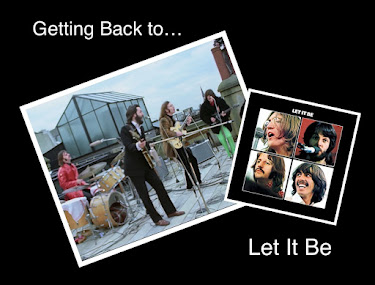
Getting Back To Let It Be

I don't know about you, but between the Get Back documentary and the 50th Anniversary edition of Let It Be, my fall has been dominated by The Beatles. Naturally, I have some thoughts about all of it - read on!

The Beatles: Get Back Documentary Series
The Beatles - Let It Be 50th Anniversary Edition (Super Deluxe)
The more you know, the less you understand. That's the short version of how I felt after reading volume one of Tune In, Mark Lewisohn's minutely detailed biography of The Beatles. That lengthy tome, which takes us through the childhoods of the four lads up to the precipice of Love Me Do's release, is so full of improbable occurrences that it would beggar belief as a work of fiction. 

And so it goes with Peter Jackson's eight-hour-plus documentary series on the making of Let It Be, which is filled with forensic, sometimes phenomenally exciting details, but never fully dispels the mystery of what made The Beatles at their best so good. But it does take a long time to remind you of how spectacularly good they could truly be. 

Part of the hype around this excavation, restoration, reedit, and reevaluation of the 60 hours of footage shot in January 1969, is that it shows a happier period in The Beatles' career than Let It Be, the desultory film created by director Michael Lindsay-Hogg and released in 1970. The truth is, of course, more complicated than that. In Part One, which starts on January 2nd, 1969, they are indeed all smiles, acting as if they have all just come back from holiday when they arrive at Twickenham film studio to begin rehearsals for a return to live performance that will be accompanied by a TV special. 

The good cheer continues as they run through nascent versions of I've Got A Feeling, Don't Let Me Down, Gimme Some Truth, All Things Must Pass, and fragments of other songs old, new, and covers. It's remarkable how carefully they listen to each other and flash enthusiastic smiles from time to time. But there are red flags from the beginning. The studio doesn't sound good to them, they feel exposed in the enormous room, and the live performance is hanging over their heads, necessitating breaks for discussion that circle around and go nowhere. For the viewer, how much this will fascinate is in direct relationship to your passion for The Beatles - and for seeing the sausage get made. 

One misunderstanding I had that was thoroughly cleared up by Part One is the creation of Don't Let Me Down, which I always assumed from listening to bootlegs was presented as this perfect song that Paul tried to muck up with annoying counterpoint vocals. But it was actually that John only had fragments and Paul is trying to goose the song to completion however he can. Before work on it grinds to a halt, there's some interesting discussion about parts of the song being too "corny" or "pretty," with Lennon defending its simplicity. It finally comes down to George to nuke Paul's unnecessary complications, by pointing out that it sounds "awful." But as many versions as we see throughout the series, the leap to an indelible masterpiece is never quite seen. Either it was off camera or it was just unspoken.

The most serious issue, of course, is George's discontentment in his own role, both at playing third wheel to one of the greatest songwriting duos in history, and to feeling technically inadequate to this method of trying to gin up songs in real time. He recognizes his limitations around improvisation, unfavorably comparing himself to Eric Clapton, which leads Paul to say: "But that's jazz." They're clearly not communicating. 

There's also this earlier nugget from George: "It should be where if you write a song I feel as though I wrote it. And vice versa...That was the good thing about the last album. It's the only album, so far, I tried to get involved with." And Paul just says: "Yeah."

Eventually George walks out and Part One ends in disillusion and near dissolution. But there are amazing moments, such as when, on the morning of January 7th 1969, when John is late,  and Paul, clearly frustrated at their slow progress, starts strumming on his Hofner bass, rocking back and forth like he's possessed. The best word for what happens next is a conjuring, as he draws the basic structure of Get Back out of his soul. Ringo and George look on, with the latter saying, "It's good, you know, musically, its great." He starts working out a part, and Ringo starts singing backup vocals, before taking up the drums, and soon all three of them are grooving together. Jaw-dropping stuff. 

Michael Lindsay-Hogg, for all his apparent skill at camera placement and coordination, is full of terrible ideas about the performance ("How about an orphanage?") and seems unable to read the room throughout. He even manages to get in a brief pissing match with Linda Eastman (McCartney) about who is the bigger fan of the Fab Four.  But he manages to get them all set up when, in Part Two, they move to the smaller confines of their new studio in the Apple building. Even with George back in the fold, this and parts of Part Three are a bit of an endurance trial, as you watch them simultaneously create the songs loved by generations - and attempt to murder them in their cribs by performing them in every style of parody you can imagine. Even this lover of their Christmas singles had his patience tested from time to time, but I guess performing Two Of Us as clenched-jaw ventriloquists is what John and Paul needed to do to re-cement their bond!

The ultimate payoff is hinted at when Billy Preston, whom they had known since their Hamburg days - and whom George had rhapsodized about in Part One - drops by for a meet and greet and essentially ends up joining the band for the remainder of the sessions. The sheer musical skill of Preston is astonishing as he just sits down at either a Rhodes electric piano or a Lowry organ and instantly plays parts that are nearly ones we hear on the final versions - and always with great exuberance and enthusiasm.

I also delighted in observing John's love affair with his Fender VI, a six-string bass that he plays on several songs, including The Long And Winding Road, when Paul is occupied by piano. He's often seen cross-legged on the floor, gently caressing notes out of the instrument. Yoko, whom I should have mentioned earlier, shows no signs of jealousy, but is rather content to sit and listen. She does show enthusiasm for some of the songs, especially as they come together more, and at times is seen in animated conversation with Linda - a beautiful sight.

In Parts Two and Three, there are flashes of musical perfection, master takes, even, evincing that unique and beautiful sensation of pure harmony between four people (or five, counting Billy) but it's not until the live performance finally takes place that we get an uncut (well, mostly) dose of Beatles magic. All that talk finally led to them making their way up to the roof of Apple for that famous last concert, although there was last-minute hesitation about even that. Lindsay-Hogg's skills come to the fore as he sets up ten cameras - five on the roof itself - and prepares to capture this historic moment. 

Not having performed live in three years, the four Beatles show some jitters - and also some worries about the roof's stability, but finally take their places, and run through a quick and ragged soundcheck of Get Back, getting the attention of their impromptu audience on the street. Then, with less than 50 minutes left to go in the series, they count off the first full performance of Get Back heard in public and it's...OK. But you can sense their true power coming back - and they feel it, too, exchanging glances, looking cool, smiling at each other. Then they do it one more time and...LIFTOFF. John executes his intricate rhythm and lead parts with panache, Billy's fingers dance on the keys, George strums along, easy breezy, and Paul is finally fully feeling himself, interjecting little whoops and hollers and finding the parts of the song to push his voice. Cut to Maureen Starkey bobbing her head hard, like I would have been. 

Then, they launch into Don't Let Me Down, with John and Paul harmonizing beautifully, and, even with a bit of gibberish from John, it is glorious. But it's when they kick right into I've Got A Feeling that it dawns on you: they could have done this more than once. They could have taken this on the road! It would have been one of the greatest tours in history, of that I have no doubt. Of course, if that had happened, we might not have gotten Abbey Road, which is a tough trade-off for posterity to accept. 

Throughout this magnum opus, Jackson makes almost only good choices. There are a few uncomfortable moments, such as when he overlays footage of The Beatles in their touring pomp as they blow through a version of Chuck Berry's Rock And Roll Music at Twickenham. Nice try. One could also complain about the highly fragmented approach to the rooftop concert, with all of its split screens and many cuts to the people in the street and the Bobbies sent to inquire about the noise. This is part of the story, yes, but it also dilutes the sheer brilliance of what the Fabs are doing. But, damn, nothing can keep us from the ultimate bliss of John delivering the loving and joyous version of I Dig A Pony that appears on the Let It Be album, screwing up his face in pleasure at George's perfect guitar solo, which firmly beats Clapton at his own game. You really can syndicate every boat you row, after all!

Of course, we've seen much of this before, in the original Let It Be film and on YouTube, but it's never looked as good, with Jackson's technical wizardry making both sound and vision pop with crystal clarity. We also owe Jackson a debt of gratitude for organizing the trajectory of what would eventually become their final release. The calendar graphic is highly effective at keeping us rooted in the timeline. The time at Twickenham, painful as some of it is, has never been so well-explicated. Bootlegs tell only part of the story, and Lewisohn himself elides most of it in his classic book, The Beatles: Recording Sessions, only picking up the story in full when they come to Apple. Jackson also does a great job highlighting some of the people around The Beatles, like Mal Evans, their indefatigable "road manager," who is as patient with a pen to take down lyrics as he is sourcing an anvil for early takes of Maxwell's Silver Hammer.

As a three-part series, Get Back lacks the shapeliness of a great documentary film, and, with each part well over two hours, even the gripping structure of a good docu-series. But it puts you in the shoes (and occasionally flamboyant boots) of The Beatles as they struggle through harmony and dissonance and unity and disarray. While not all sunshine and flowers, it is a more nuanced look at this time in The Beatles career than Lindsay-Hogg's dour original, and is a highly valuable project for that reason alone. If you are any kind of a fan of the band, or curious about the creative process and the pitfalls and power of collaboration, it is well worth paying for at least a month of Disney+ to immerse yourself in this shaggy tale. 

The Super Deluxe box set, on the other hand, is a typical Beatles product in that it seeks to organize and sculpt things a bit more than Jackson's lengthy project would allow. But this does make for good listening, as the two discs (in CD terms) of jams, rehearsals, and sessions, bear repeat plays and decently summarize all the ins and outs of making Let It Be. Whether by choice or due to contractual arrangements with Disney, we do not get the complete audio of the rooftop concert or even a hint of some of the intriguing offshoots of the Twickenham work, such as a jam with moments of hushed majesty called The Palace Of The King Of The Birds, a segment of which is heard over the end credits of Part One. The bootlegs are not yet obsolete.

The set also includes Glyn Johns' May 1969 assembly of an album called Get Back, which was his first attempt to make sense of all that happened that January. In a recent issue of Mojo, he relayed that when presented with this mix, The Beatles "...all came back the next day and said, to a man, 'fuck off.' They hated it." And they were right. Hearing it here, and knowing what gold was also on the tapes, one questions Johns' sanity or at least his hearing. Sure, giving us The Beatles "warts and all" is an interesting concept, but he seems to purposely choose takes that are just this side of good, much less great. They had master takes that he simply ignored for the sake of a principle! 

Johns also made an assembly of Get Back in January 1970, which as I understand it, was pressed onto acetate and sent to radio stations as an advance of The Beatles next album. Was that one any better? Not by much, since it used the same takes of the songs the two have in common. At least it eliminated Paul's Teddy Boy, which I find irritating in any version, and included George's I Me Mine, was recorded on January 3rd, 1970, the last time more than two Beatles were in the studio (John was absent) until the "Threetles" sessions for The Beatles Anthology in 1994. We get to hear that version of I Me Mine (all 1:45 of it) on an EP that fills out the box with new mixes of the single versions of Don't Let Me Down and Let It Be, both of which sound fine but don't further illuminate already magnificent songs. I also question the need to have 30 seconds of dialog precede Don't Let Me Down, which is not part of the original single release. If you want one of Lennon's best songs as he intended, you've still got to get the Mono Masters set or Past Masters Vol. 2 - or track down the original 45.

But what of Let It Be, the LP finally released on May 8th, 1970, and which all of this pomp purportedly celebrates? While not included in Get Back, most people are familiar with its final stages, when John and George surprised everyone by reviving the project and handing the tapes over to Phil Spector. John and George were highly enamored of the producer, even if his best days were behind him, both working with him on large swaths of solo material. The results created the only Beatles album with an asterisk, with everyone from fans and critics to Paul himself questioning many of Spector's choices. According to Lewisohn, Paul even accused the other Beatles in High Court of seeking to "ruin his personal reputation" with the orchestrated version of The Long And Winding Road.

In 2003, Paul produced his terribly titled rejoinder, Let It Be...Naked, which sought to right some of the perceived wrongs by stripping away the Spectorization and selecting different takes and edits in some cases. It was a good, if somewhat airless, alternate approach, with Let It Be and I Me Mine being the most satisfying beneficiaries of the treatment. The Long And Winding Road, sorry to say, still felt like it lacked something, and in the Get Back documentary Paul is seen discussing adding strings and other embellishments. 

But how bad is Let It Be, with "bad" being a relative term, as this is still The Beatles, after all? As a five-year old, it was just another album by my family's favorite band. While I recognized a certain different texture due to the orchestrations - the heaviest on a Beatles album since Goodnight - it still brought great joy. Listening now to my 51-year-old copy, which is in decent shape, I can take new delight in Two Of Us, now having the visual of John and Paul, face to face with their acoustics, while George, off to the side, does his country licks in place of a bass line. It's just a tremendously moving song and Spector does nothing to interfere with it or I Dig A Pony's awesome rooftop performance. I actually love the false start, which Paul saw fit to remove. Across The Universe now sounds a little more out of place, so firmly am I aware of its 1968 provenance. I like the "Wildlife" version better - best presented on the Mono Masters collection - and also agree with David Bowie that a more acerbic treatment was required.

I Me Mine is the first song with Spector's new material added, and the brass, strings, and choir sound bolted on and just plain unnecessary. His edit to extend the song works perfectly, however, making for a more satisfying listen in that regard. Let It Be also gets the full treatment and works better as the song itself attracts that kind of grandeur. John's Fender VI feels a little exaggerated but Ringo's drums have a nice clarity. Sonically, the orchestra lacks the depth of the one on Goodnight, perhaps pushing the limits of 1970's technology. Fifty seconds of Dig It and 40 of Maggie Mae are the perfect reminders of the playful atmosphere of parts of the sessions. Unlike Paul, I wouldn't want my Let It Be without them.

Side two kicks off with those ringing guitars of I've Got A Feeling, and once again I can connect to the recording, on the rooftop, with the glances between John and Paul easily recalled as they exchange lines. It's a great performance, too, with a low-end throb and George ripping off those tense leads with authority. One After 909 is a fine romp from the rooftop and sounds as fun as it looked. The Long And Winding Road, seen as too maudlin, attracts controversy as a song apart from Spector's work, but I think there's a fine melody in there, a beautifully restrained vocal from Paul, and now I have the added visual of the band in the studio to light my way through the morass. The strings, etc., are indeed a bridge too far, overwhelming not only Ringo's sensitive drumming but Paul's vocals, two tracks of which Spector erased to make room for more glop. 

In Get Back, we see them open up a box and pull out a cute little lap steel guitar. Picturing John playing it like a kid with a new toy only adds to the charms of For You Blue ("Go, Johnny, go!" George interjects during his overdubbed vocals). Get Back, a studio recording with rooftop dialog added by Spector, sounds fantastic, and knowing how many takes it took to get from Paul's Twickenham fever dream to this only makes it seem more remarkable. As predicted, I'm bobbing my head just like Maureen. A perfect ending to an imperfect album.

Some of the issues described above were helped slightly by the 2009 remaster, which added clarity without doing much more. Now, we have a wholly new mix by George Martin's son, Giles, who has previously worked wonders with Sgt. Peppers and the White Album (not so much with Abbey Road). Martin the younger sought to find the best of both worlds, respecting the original 1970 release while endeavoring to integrate all the disparate elements, whether the old recording of Across The Universe, or Spector's after-work. And guess what? It works a treat! That touch of grandiosity now elevates I Me Mine instead of swamping it. Let It Be takes you to church, George's overdubbed solo slicing through with a new physicality, John's bass anchoring everything, and Ringo's creativity shining bright. Even The Long And Winding Road goes down more smoothly, with Paul's voice having more presence and George's guitar, played through a Leslie amp for that watery sound, actually there at all. Is it a great recording? Maybe not, but it's easier to judge it for what it is than thinking about its constituent parts. Across The Universe still feels a little out of place, but that's more due to its instrumentation than the recording.

Over all, the album sounds terrifically well balanced, with renewed clarity and weight and Martin's work confirms Spector's skill at record-making. All of the dialog and scattershot bits make sense and give Let It Be the feel of a real album, as opposed to Johns' proposed Get Back sound collages. So, what is the poor consumer to do after all of this? If you can afford it, by all means get the Super Deluxe set on vinyl ($130) or CD ($115), although the book, which is supposed to be great, is likely more impressive in the former package. The Glyn Johns Get Back is packaged to look like an official album, making for a cool object, but it's not likely you will play it often. For most people, cutting to the chase and getting the new version of Let It Be on vinyl will be enormously satisfying, especially if you don't already have it in an earlier version. If you stream, you can find all of the material there as well.

Having watched the documentary and listened to everything that's now been officially released, I find myself marveling anew at what these four complex, flawed individuals were able to create and achieve. While the Get Back/Let It Be project was more seat-of-the-pants than anything they had done before - even the debut album was rehearsed for months on stage before they laid it down in one session - I've listened to enough bootlegs (and the Anthology volumes) to know that artistic greatness was never guaranteed when they started recording. It was their attention to detail, their hunger for success and perfection, and that indefinable fifth element that was created by the four of them together that made The Beatles so unique and enduring. And no amount of information overload will change that.

You may also enjoy: 
The Book Of Fab
The Beatles Thing
One, Two, Three, Four, Cough


Monday, August 05, 2019

Stax-A-Lujah


About 30 years ago a package appeared at my studio door addressed with a familiar chicken-scratch handwriting. I knew it was from Mike D. and within were two CD’s: Derek & The Dominoes’ classic 1970 album Layla & Other Assorted Love Songs and a single-disc compilation called Top Of The Stax: 20 Greatest Hits. There may have been a Post-It Note scrawled Happy Birthday, but I knew what it was for either way.

I turned my nose up at Layla, having been saturated by the title track during my childhood - until I listened. It quickly became a favorite album, a love that continues to this day, although I mainly listen to Derek bootlegs now. Hearing it in context even gave Layla new currency. 

The Stax collection was perhaps even more extraordinary, with not one duff track. I knew a lot of the songs, like Mel & Tim’s Starting All Over Again, Sam and Dave’s Hold On, I’m Coming, The Staple Singers’ Respect Yourself, Green Onions by Booker T & The M.G.’s and, of course, the mighty Shaft by Isaac Hayes. But I hadn’t heard most of them for something like 15 years and what was most amazing was that they operated both at the level of nostalgia and timelessness. As proven out by the other songs, there was a level of quality in songwriting, singing, playing, and production that was perhaps only rivaled by Motown. 

But Stax has that additional grit, with a little more funk to the grooves and real-life adult situations described in songs like I Forgot To Be Your Lover by William Bell and Woman To Woman by Shirley Brown. Top Of The Stax became a daily listen and one of the few albums that needed no adjustments to play at a party. My true love affair with Stax began with that humble collection. 

Over the years I tracked down some of the related albums, like Johnny Taylor’s Tailored In Silk or Whatcha See Is Whatcha Get by The Dramatics. And Isaac Hayes became an obsession, with revelation after revelation from albums like Hot Buttered Soul, To Be Continued and Black Moses, all the way up through his still underrated Polydor years. But when it came to Stax as a whole, I mainly followed the lead of their extensive reissue campaign and focused on the singles, even if they were sometimes packaged up in box sets of impressive weight and size. 

This past June that all changed, however, thanks to a flood of reissued albums celebrating both Black History Month and the 50th Anniversary of the “Soul Explosion” period at the label, which had them rebuilding after the devastating loss of Otis Redding and several member of the Bar-Kays. Many of the albums have been out of print for years in any form and all are appearing on streaming platforms for the first time. While the Soul Explosion took place over a couple of months in 1969, the years spanned by the campaign start in 1968 and stretch all the way to 1975, when the label was shuttered for the first time since 1957. 

While there’s plenty of music among the 30 albums that’s resolutely “on brand” for Stax, there’s enough variety that it makes clear another factor that distinguishes it from Motown: they still believed in older forms of African American music as popular music. While “The Sound Of Young America” certainly had its roots in the blues, gospel and girl group sounds of the 50’s, it was all packaged in bright, shiny new clothes or, by the end of the 60’s, psychedelic mufti. While Stax could go pop or incorporate rock influences, they also persisted in releasing instrumentals and doo wop or church-inflected sounds long after the heyday of those genres. And even if they didn’t hit it big with most of these albums, there is no air of preservation, such as with other labels like Arhoolie or Alligator. The entire history of black music was just in the mix, following the talent they had rather than shunting it into uncomfortable shapes. 

Speaking of mixes, as a public service, I have worked my way through all 30 albums and selected a representative cut from each - with one exception. The most anomalous record in the bunch is also a wretched, festering pile of absolute trash that should have remained in the dustbin of history. I’m speaking of the debut album by the band called The Knowbody Else, who later met with some success as Black Oak Arkansas. While the music is a tepid-at-best attempt at funky southern rock, the vocals by Jim Mangrum are some of the worst singing I have ever heard. Maybe he improved in the BOA days, but I can’t recall one of their songs and I have suffered enough at his hands. I’d rather hear an hour of Johnnie Taylor talking in his sleep. 

Moving right along, the only other qualification was to select a different track if the album contained any hits. So you won’t hear Frederick Knight singing I’ve Been Lonely Too Long, Taylor’s classic Who’s Making Love, or other well-known songs. What I hope you’ll discover is just how strong the bench was at Stax, even if radio or record buyers weren’t always listening in great numbers. Deep cuts, that is, from one of America’s greatest labels, with unsung heroes like Bettye Crutcher coming into focus as bedrock contributors to the catalog. And if a song by an artist you’ve never heard before grabs your attention, by all means check out the album. You may find your respect growing ever greater for the accomplishments of Jim Stewart, Mae Axton, Al Bell, and all the singers, songwriters and players who made this stuff happen. 

Here’s a brief rundown of what you’re going to hear. 

Be Young, Be Foolish, Be Happy by Booker T. & The M.G.’s from Soul Limbo (1969)

The cheese factor can run a bit high on this album, but on this song it works thanks to the interplay between Steve Cropper’s guitar and Booker T.’s organ. Oft-recorded, the song was written by Ray Whitley working with  J.R. Cobb Of Spooky, Stormy and Atlanta Rhythm Section fame. Even as an instrumental, the title of the song says it all!

Soul-A-Lujah by Johnnie Taylor, Eddie Floyd, William Bell, Pervis Staples, Cleotha Staples, Carla Thomas, and Mavis Staples from Boy Meets Girl (Classic Stax Duets) (1969)

This handsome package was well worth the $10 I paid for an original vinyl pressing a few years ago but there’s no denying that it doesn’t quite live up to the excitement generated by the concept. For one thing, the re-recordings of evergreens like I Thank You or Piece Of My Heart have nothing on the originals. For another, the newer songs aren’t very memorable. But this number personifies “exuberance” with a vocal arrangement nearly matching Sly Stone’s ingenuity. Remember the names Bettye Crutcher, Homer Banks, and Raymond Jackson - they wrote this song and many others under the collective name We Three.

I’ve Got A Feeling by Ollie & The Nightingales from Ollie & The Nightingales (1969)

Formerly The Dixie Nightingales (taking off on The Dixie Hummingbirds), this gospel group led by Ollie Hoskins was straight out of the church and gussied up for prime time. As that would imply, the call and response is key, but Al Jackson, Jr.’s extra sharp drumming drives the bus. A fine album overall, even if it doesn’t touch similarly motivated collections by The Staple Singers. 

Wishes And Dishes by The Sweet Inspirations from Estelle, Myrna and Sylvia (1973)

The tail end of a brand name that launched the careers of Doris Troy, Dionne and Dee Dee Warwick, and Cissy Houston while singing backup for Aretha Franklin, Van Morrison, and Jimi Hendrix, the group now consisted of Estelle Brown, Myrna Smith, and Sylvia Shemwell. It was up to them to honor the legacy - and they delivered. I think it's Estelle singing lead on this one, bringing a gospel fervor to a slow-burner with adult themes. Producers/co-writers David Porter and Ronnie Williams wisely let the song go beyond the length of a single. The whole album is a worthy slab of sweet 70's soul.

So Nice by The Mad Lads from The Mad, Mad, Mad, Mad, Mad Lads (1969)

"Do you remember when we used to play mommy and daddy each and every day," John Gary Williams sings in his creamy high tenor in a song drenched in soda shoppe fantasies and stacked harmonies. Bettye Crutcher collaborated with Carla Thomas' brother Marvell to write this one and it's definitely the most memorable track on the album.

Come On Back by J.J. Barnes from J.J. Barnes & Steve Mancha: Rare Stamps (1969)

This compilation gathered up singles by Barnes and Mancha, like this one originally released on the Groovesville label in 1967. Co-written by Barnes and Don Davis (who later revived Johnnie Taylor's career with Disco Lady), the vocal bears a striking similarity to Marvin Gaye. So does the arrangement, but the strings and conga make it sound about five years ahead of what Gaye was doing at the same time. Influence is a two-way street...


Somebody's Been Sleeping In My Bed by Johnnie Taylor from Rare Stamps (1969)

Compiling Taylor singles, including Who's Making Love, makes for a great album. This scorching blues from 1967 also has the Bettye Crutcher stamp and a masterful vocal from Taylor. Blues, soul, funk, disco - there was little he couldn't do.


My Baby Specializes by Soul Children from Soul Children (1969)

Formed by Isaac Hayes and David Porter after losing Sam & Dave to Atlantic, it took a while for this vocal group to reach their peak in 1973 with I'll Be The Other Woman. But this album is full of gems, many of them covers of earlier Stax singles like this one originally sung by William Bell & Judy Clay a year earlier. With four effervescent vocalists and a trademark, low-slung Stax arrangement, the song is a heckuva groove.


I've Fallen In Love by Carla Thomas from Memphis Queen (1969)

While her chart success was diminishing a couple of years after B-A-B-Y and Tramp (with Otis Redding), there was no lack of artistic success on this album. Swirling strings introduce this moody number, written by Thomas herself, and her complicated relationship to love is embedded in the bittersweet melody.


Don't Make Me A Storyteller - Steve Mancha from J.J. Barnes & Steve Mancha: Rare Stamps (1969)

Kind of a utility player, Mancha never made an album but based on this track he had a fine way with pleading his way through a song. It was also the definitive version of a song later waxed by many other Stax artists, so all credit due to Mancha.


Jilted by The Goodees from Candy-Coated Goodees (1969)

Strings, electric sitar, epic horns - they threw the kitchen sink at this updated girl group song, a typically adult story about getting pregnant and getting dumped on the altar. Co-written and produced by Don Davis, both the composition and sound reflect the rare intrusion of British psychedelia into the normally all-American world of Stax.


One With Sugar by The Mar-Keys from Damifiknow (1969)

In various incarnations, The Mar-Keys had provided back-up on many Stax sessions while occasionally hitting it big themselves. By this point, they were essentially Booker T. & The M.G.'s plus the Memphis Horns and much of this album is made up of redundant covers of hits like Mustang Sally or Knock On Wood. The track has a nice gutbucket feel, however, and all the cowbell you need.


Now You Got Me Loving You by The Dramatics from A Dramatic Experience (1973)

The Dramatics had been plying their trade since 1964, finally hitting it big with their debut LP,  Whatcha See Is Whatcha Get, in 1971. This follow-up doesn't mess with the sly, proto-disco sonics and is nearly as good. Tony Hester, who wrote In The Rain, also penned this number and produced the album.

Baby It's Real by Rufus Thomas from Crown Prince of Dance (1973)

Carla's father was known for extremely danceable, near-novelty songs like Do The Funky Chicken and Do The Push And Pull, but amongst the pandering tracks on this album (Funky Robot, etc.), this song also proved he could lay you out with a ballad when he wanted to - he should have done more like it!

Don't Mess With My Money, My Honey, or My Woman by Mel & Tim from Starting All Over Again (1972)

This track, which opened up the album that contained one of their biggest hits, has an almost Jackson 5 feel and witty, taunting lyrics. The production, by Barry Beckett and Roger Hawkins of Muscle Shoals fame, is slightly more widescreen than the usual Stax sound. 

You Cut Up The Clothes In The Closet My Dreams by Melvin Van Peebles from Don't Play Us Cheap (1972)

The film version of this musical by Van Peebles, known for basically inventing Blaxploitation cinema with Sweet Sweetback's Badassssss Song, was by some reports a misfire. But even bad reviews praised Joshie Jo Armstead's committed performance on this gospel-fueled song, the most well-developed track on this odd album.

Walk Tall (In This Here Land) by John KaSandra from Color Me Human (1970)

Released on Respect, Stax's political offshoot, this album by John S. Anderson is filled with feel-good social criticism/empowerment songs. He's obviously fired up by the smoking-hot arrangement on this song and hearing him dig into the words "Walk tall!" along with the horns is an addictive thrill. While this may be the strongest single song, fans of Joe Tex and Rodriguez should definitely dig into this forgotten treasure.

You Make The Sun Shine by The Temprees from Love Maze (1973)

As impossibly smooth as the Chi-Lites or The Manhattans, this vocal group on Stax's We Produce subsidiary is ripe for rediscovery. There are many pleasures to be found on their second album, but this haunting number, written by Leon Moore, would not get out of my head. Kanye West, who used the song on The Corner by Common, seems to agree. 

Baby, That's A No No by Barbara Lewis from The Many Grooves of Barbara Lewis (1970)

Lewis, who hit the Top 5 with her own composition Hello Stranger (you heard it in Moonlight) in 1963, was already a decade into her career when she recorded this, her only album for Stax. It was also her last album, although she continued performing until 2017. Swathed in echo, her voice sounds flown in from another era on this collection, which is one of the reasons it doesn't quite hit the mark. Also taking on Windmills Of Your Mind after Dusty Springfield was a fool's game for any singer, but this song almost makes you believe she could compete with Aretha or at least Dionne Warwick.

I Could Never Be President by Johnnie Taylor from The Johnnie Taylor Philosophy Continues (1969)

"I could never be President/As long as I'm lovin' you," Taylor sings on this lively number written by We Three. It's just lively enough to make you forget you were hoping he was doing a socially conscious number like Syl Johnson's Is It Because I'm Black? The album has too many covers (It's Your Thing - really, Johnnie?) but goes down fairly easily.

People, Get It Together by Eddie Floyd from California Girl (1970)

Floyd, who co-wrote Knock On Wood with Steve Cropper, was equally at home on either side of the studio glass. In fact, he co-wrote all of the best songs on this long-player (mostly with Booker T.) and gives his all on this inspirational stomper, occasionally sounding like Otis Redding reborn. Floyd is still out there pitching and performed at the Royal Albert Hall in 2017.

Phases Of Reality by William Bell from Phases Of Reality (1972)

Bell has been recording since 1961, hitting it out of the park with his first single, You Don't Miss Your Water. He won a Grammy two years ago for best Americana album and performed Born Under A Bad Sign - which he wrote! - with Gary Clark, Jr. All this is to say, I shouldn't have been surprised that it was hard to pick just one song from this slab of 70's funk, also produced by Bell. It's easy to imagine Sly nodding his head along to this one. Overall, maybe the best album in the whole campaign.

Let Me Down Easy by Inez Foxx from Inez Foxx At Memphis (1973)

Everyone knows Mockingbird, which Foxx recorded with her brother Charlie in 1963. But that chirpy number is world away from this dark-hued jam, a remake of the 1965 Betty Lavette standard written by Wrecia Holloway and James McDougall - and at least as definitive. Her assured, emotive singing throughout will make you wish this wasn't her only solo album.

It Ain't Easy by The Bar Kays from Do You See What I See (1972)

On tracks like this, The Bar Kays made some of the most convincing 70's music in the Stax catalog. The band, which had to be completely reconfigured after four of their members died alongside Otis Redding in 1967, was now coming hot off of backing Isaac Hayes on Hot Buttered Soul and ready to prove themselves as a funky, socially-conscious force to be reckoned with. Let's hope the prior album, Black Rock, is reissued soon.

Harlem Heaven by The Rance Allen Group from A Soulful Experience (1975)

Known mainly for his modernizing influence on gospel, Rance Allen's sweet falsetto perfectly describes a more earthly heaven on this track from a fine album released on Stax's Truth subsidiary. The reggae-influenced arrangement, by Ronnie Williams, who co-wrote the album with David Porter, is as charming as the song. 

If I Give It Up, I Want It Back by David Porter from Victim Of The Joke?...An Opera (1971)

Even though he wrote those dozens of hits alongside Hayes in the 60's, Porter on his own as a frontman was not the same proposition. Full of odd interludes and an ill-conceived cover of The Beatles' Help, the album falls flat as a whole but his belief in the Stax sound of earlier years is almost enough to make you forget that he was stuck in the past. Hayes was already far in the future and would never look back.

I Let My Chance Go By by Frederick Knight from I've Been Lonely For So Long (1973)

The title song outshines the rest of the album, but there's nothing wrong with this regret-soaked ballad and the out-chorus alone is worth the price of admission. Don't feel bad for Knight - he wrote Be For Real and Ring My Bell, both of which have had long lives.

Little Bluebird by Little Milton from Waiting For Little Milton (1973)

When you learn that Little Milton made his name on the Chess label it makes perfect sense that he was as accomplished a guitarist as he was a singer. He had also been honing his chops since 1953! Working in a vein similar to B.B. King (he covers The Thrill Is Gone on this album), he blows out this old Booker T./Hayes/Porter tune into an eloquent and epic blues. 

Soul On Fire by Kim Weston from Kim Kim Kim (1970)

It's hard to understand why this Motown alumnus didn't become another Gloria Gaynor or Thelma Houston after hearing this nearly overwhelming performance of a song she wrote with her husband Mickey Stevenson. The soul was indeed on fire. Unfortunately, however, she didn't make an album for 20 years, skipping the Studio 54 era entirely. Listen to the whole album and imagine what could've been.

Better Get A Move On by Louise McCord from Wattstax: The Living Word (1973)

While any Stax playlist worth its salt should have something by Isaac Hayes or The Staple Singers, both of whom appear on this live album, this absolutely astonishing performance of Bettye Crutcher's song by gospel great McCord just seemed like perfect way to bring things to a close. You will be forgiven if you clap along with the audience!

Let me know what hits the mark for you and visit this site for more info from Stax.

Listen to all the tracks here or below and keep track of other 2019 reissues by following this playlist.


You may also enjoy:
Best Of 2018: Out Of The Past
Record Roundup: Out Of The Past

Saturday, December 16, 2017

Best Of 2017: Out Of The Past


The clattering machinery that delivers new versions of the past, whether via deluxe reissues or previously unreleased material, took a while to get up to speed this year. I was even slightly concerned at mid-year about finding even ten truly great things to properly stock this category. But the aroma of holiday cash has a way of focusing the minds of labels of all sizes, so now that stockings and menorahs are sprouting in every household, it’s clear I needn’t have worried. If you're looking for gift ideas, you’ll find more than enough here to satisfy even the most discerning of your retro-centric family and friends.

Reissue Of The Year

Bob Dylan - Trouble No More: The Bootleg Series Vol. 13 (1979-1981) This astoundingly rich deep dive into one of Zimmy’s most controversial periods is one of the highlights of an already extraordinary series, ranking with my favorites, Live 1975 and Tell Tale Signs. When you consider that one of the most celebrated musicians of the century went out on the road with all new, religiously-focused songs it becomes ever clearer that Dylan has always been a true believer - in himself. Another thing that went unmentioned in my verbatim report of its creation is that the Dylan camp’s maximalist approach over the last few sets (Like on last year’s incredible entry, The Cutting Edge, where they included every take of Like A Rolling Stone) makes me wish they would return to the Rolling Thunder Revue and mine more gold from that rich seam. But there’s more than enough here to occupy me until the next set. Ready for the Neverending Nineties?

Lost Masterpieces

Alice Coltrane - World Spirituality Classics Vol 1: The Ecstatic Music of Alice Coltrane Turiyasangitananda This collection of ritual music may never not sound a little strange, with its combination of chanting, percussion, and swooping synths, but it needs to be heard to be believed.

Laraaji - Celestial Vibrations For more uniquely transporting sounds, finding the debut album by Larry Edward Gordon - released on a private press label before the ambient master met Brian Eno - is easy now thanks to wider release by Soul Jazz. 

Ornette Coleman - Ornette At 12/Crisis It’s a sad commentary on the state of our “all music all the time” ecosystem when it takes 40 years for TWO major albums by one of our most significant musicians to appear in a digital format. And even now that Real Gone Music has engineered the reissue of these records, their licensing deal only permitted a release on CD, which seems to be a sunsetting medium. All I can say is, if you no longer have a way to play shiny silver discs, make friends with someone who can because you need this music. 

Both Ornette At 12 and Crisis are live albums, recorded on opposite coasts seven months apart, but the only difference between them and Coleman’s studio work at the time is that there was an audience involved. The quality of the sound is more than acceptable and, on the four tracks that make up Ornette At 12, even extraordinary. Charlie Haden’s bass never sounded better and Coleman’s alto sax is a warm ribbon of golden melody throughout. Dewey Redman’s tenor is the perfect foil as he is more than willing to pursue the overblown noises and extended techniques so often associated with “free jazz.” Ornette does push that envelope a bit when he sallies in on violin, but it still works, as does his one trumpet solo, which is surprisingly beautiful. 

Crisis features Don Cherry on trumpet (and flute) so Coleman leaves those duties to him. As you might expect from the original cover art, which features a burning Bill Of Rights, these five tracks tend toward the political, in the same way Jimi Hendrix’s Machine Gun is political: a purely sonic response to the world's chaos. So Space Jungle and Trouble in the East are uncommonly aggressive and cacophonous, almost sounding like a different band on the latter track thanks to the combination of Coleman's violin and Cherry's doubled flutes or recorders. Haden's composition Song For Ché, a hymn-like creation, is also featured in likely its definitive performance.

I can't say enough how important it is to have these crucial albums back in circulation. Hopefully someone will do the same for the latter-day Coleman albums that are still out of print, like Of Human Feelings, his sassy take on pop-jazz from 1982. Also of interest to Ornette fans is the long-awaited release of both his final performance at a star-studded tribute concert in Prospect Park and the music from his memorial concert.

Hermeto Pascoal & Grupo Vice Versa - Viajando Com o Som The subtitle informs us that this album by the man Miles Davis called "the most impressive musician in the world" consists of the "Lost '76 Vice-Versa Studio Sessions." Recorded over two days in a white heat following a concert which combined his usual rhythm section with a trio of young-gun sax players, two of four tracks find O Bruxo (the Sorcerer or Wizard), as he is known, pursuing a more collective improvisational approach than his usual highly composed work. The second of these is Casinha Pequinina, a 26-minute odyssey that shows how powerfully Pascoal had absorbed his experience playing with Davis on the recordings originally released as Live-Evil. The title of album loosely translates as "Traveling with the Sound" and Casinha is indeed a trip and a half, moving from deeply reflective moods to almost comic exuberance. There doesn't seem to be any great explanation as to why the record was never released, except that Pascoal was just moving to fast to prepare it for release. Nothing has changed in that regard, as the 81-year-old legend has put out two new albums this year, one with a big band and one with a smaller group. Start catching up!


Thelonious Monk - Les Liasons Dangereuses 1960 In 1959, Monk entered a New York studio to record performances for the soundtrack of Roger Vadim's adaptation of the Choderlos de Laclos infidelity classic. Mostly remakes of Monk tunes with his tight ensemble of the time, the music was never used and never released - until now. It's of much more than just historical interest as everyone was in fine form and Monk never really played the same thing twice. The one song I could have used more of was By And By, which is (I think) the only studio recording he made of the classic hymn. A nice present for the 100th birthday of this American master.

More Brazil Classics

There seems to be no end to wonderful old records from Brazil, partially due to the efforts of Far Out Recordings, who are responsible for the Pascoal album. One of their best reissues this year was Piri's Vocês Querem Mate?, a blissful collection of psychdelic tropicalia from 1970. Tenorio Jr.'s Embalo, the sole album this piano genius made as a leader, was also put back into print this year and it is full of delights beyond the ever-popular Nebulosa.


Love Them Live
David Bowie -  Cracked Actor: Live Los Angeles '74 If only all my favorite bootlegs were spiffed up by Tony Visconti. While this will never replace David Live, which I still (perhaps unreasonably) adore, this is another invaluable document of the Diamond Dogs tour. 

The Replacements - For Sale: Live At Maxwell's 1986 The legend about The Replacements is that they delivered shows that were either focused or entertainingly shambolic. The truth is that most shows were a bit of both, which is what we get here in a fantastic multi-track recording of a concert at Maxwell’s in Hoboken, NJ. The band starts off with a furious rendition of Heyday that isn’t even half over before Paul Westerberg starts inserting the word “murder” into the lyrics almost at random, which also happens elsewhere in the show. But such ad libs never stop the train, which only really breaks down once, during a sloppy take of Sweet’s Fox On The Run. Other than that, they execute pretty much every song you would want with passion and headlong excitement, making for an essential addition to the ‘Mats catalog, featuring the original lineup in all its ridiculous and heartfelt glory. Note that if you opt for the vinyl, Rhino does not provide a download card.
The Yardbirds - Yardbirds ‘68 When I was in high school I fell hard for The Yardbirds, fascinated by their trajectory from blues-wailing live act to studio experimentalists who incorporated everything from harpsichord to Gregorian chant as they helped forge “rock” from the embers of “rock & roll.” This passion took commitment to pursue, as all of the records depicted on the back of my brother’s copy of Greatest Hits were out of print. Eventually I acquired them all, but I still needed more. So, when I spotted a copy of Live Yardbirds featuring Jimmy Page on the wall of my favorite shop (Venus on 8th Street, if you must know) for the princely sum of $35, I told them to hold it for me while I scraped up the cash. 

Eventually, I got the disc (which may or not be counterfeit, as I found out later) onto my turntable and got to hear how The Yardbirds story ended on the stage of the Anderson Theater. Or very nearly so, as Epic Reords had seen fit to bury the performance under a blanket of artificial chatter and even clinking glassware. Still it was thrilling to hear a nascent version of Page’s approach to Jake Holmes’s Dazed And Confused - he even whipped out his violin bow - not to mention singer Keith Relf’s clear tenor improvising on I’m A Man in a way that pointed forward to his brief turn in Medieval-flavored Brit-folk band Renaissance. 

Now Page, having run out of Led Zeppelin catalog items to remaster and repackage, has turned his attention to his time in The Yardbirds and worked his magic on the Anderson Theater show, which is something for all fans of the man and the band to celebrate. Besides stripping away the fake audience noises, he has polished up the mix, making everything sound as good as possible and giving his guitar an almost physical presence throughout. While this was undoubtedly a transitional period for all involved, there’s enough here to thrill any lover of both the blues and psych which make up The Yardbirds brand, even of this wasn’t their greatest period. 

I’m also not sure this was necessarily their greatest concert of the era. Page points out in the liner notes that they were doing two sets a night at the Anderson, which slowed their roll a bit, leading to an occasionally perfunctory quality to the performance. As contemporaneous bootlegs from The Shrine in L.A. show, when given a chance to stretch out they were able to get into a lengthy version of Smokestack Lightning, which was a spectacular showcase for Relf’s harp, something he excelled at more than singing, as well as storming versions of Happenings Ten Years Time Ago and The Velvet Underground’s I’m Waiting For My Man. 

Also, as much of a gentleman as Page is about the talents of Relf, bass-player Chris Dreja and drummer Jim McCarty, there was no way they could follow him where he needed to go, which was Led Zeppelin. This is also evident on the second disc, Studio Sketches, a brief collection of unfinished recordings they made around the same time as the final concerts. Even with those limitations, there are riches to be heard here, including an early version of Tangerine, so evocative even in rough form, and Spanish Blood, which features diamond-sharp acoustic playing from Page and a pulpy spoken word segment from McCarty that almost makes it sound almost like a song by The Clientele. It should be noted that, as good as everything sounds, Page made some questionable choices by eliminating Relf's vocal on the Tangerine demo and part of McCarty's on Spanish Blood. Complete versions of those songs are on the the now out of print Cumular Limit album. So, Yardbirds '68 is a mixed bag, then, but a very good one. 

They Came From The Nineties

Radiohead - OK Computer OKNOTOK 1997 2007 Trust me, if I could afford the super-deluxe version of this, it would be proudly displayed next to my Ming vase. Instead, I’ll just enjoy the three unearthed songs on Spotify and hold on to my two-disc version from 2007. 

Helium - Ends With And If this compilation of rarities by Mary Timoney’s band gets more people listening to them again, that would be a very good thing. I would still recommend beginning with debut album The Dirt Of Luck, which has never gone away but was reissued on vinyl this year along with sophomore album The Magic City. However you get their sweet crunch in your life, just do it!

Reggae Roots & Branches

Every year, a small army of reissue labels fills in more reggae history, a seemingly bottomless well of goodness. In case the forest is obscuring the trees, here are a few from 2017 with real staying power. 

The Abyssinians - Satta Dub (Deluxe Expanded Edition) A big helping of classic, rootsy dub made bigger and better with more tracks, including dubs of dubs!
Lloyd Parks - Time A Go Dread Crucial collection from a soulful yet tough singer that deserves more attention. 
Lee Perry - Back On The Controls: The Session Reels Five stunning singles in stunningly remastered sound. Originally released in 2015 as a box set of vinyl 45s, this killer collection is now available to stream and download. Will we ever get enough?

African-American Power
Isaac Hayes - The Spirit Of Memphis (1962-1976) After proving himself, in collaboration with David Porter, to be one of the greatest songwriters of the soul era, Ike branched out into a solo career that was at least as spectacular. Albums like Hot Buttered Soul, To Be Continued, and Black Moses were essentially perfect - and essentially impossible to anthologize due to the length of the tracks. This new four disc set gamely tries to cover all facets of Hayes’s career (until 1976, that is, when he signed with Polydor), starting off with a generous helping of his songwriting and production for the likes of Sam & Dave, moving through his tentative first steps on his own (Sir Isaac & The Do-Dads, anyone?), and then sampling from the solo albums in a fairly effective manner, although with a few too many edits for my taste. 

Most importantly to this longtime listener, however, are the rarer goodies, like the 33-minute uncut version of Do Your Thing from Shaft that shades into Bitches Brew territory, or a live set from from a PUSH event in Chicago that features a performance of His Eye Is On The Sparrow that is staggering in its vulnerability and mastery of the gospel form. In the end, while one could quibble with some of the selections, the mere fact of the existence of The Spirit Of Memphis is a great thing, giving some proper due to the legacy of Isaac Hayes, which is so often reduced to a song or two. Get the spirit!
Various Artists - Soul of a Nation: Afro-Centric Visions in the Age of Black Power: Underground Jazz, Street Funk, and the Roots of Rap 1968-79 If you read that long title and assumed that the first cut was The Revolution Will Not Be Televised by Gil Scott-Heron, you would be correct. But I doubt anyone other than a specialist could predict what else Soul Jazz has unearthed and included on this essential compilation. 

Sounds From The Bush, by the Mandingo Griot Society with Don Cherry is one of a few tracks combining notable jazz players with African-influenced sounds, with Horace Tapscott, Joe Henderson also appearing. But most of the names are unfamiliar, such as Sarah Webster Fabio, David McKnight, Oneness Of Juju and Doug Carn. Fabio’s entrant is a funk vamp with some spoken word and a lengthy band introduction, complete with horoscope signs (it’s fabulous) while the Oneness cut, simply called African Rhythms, has the distinct flavor of a PBS special, especially when the narrator says, “These are African rhythms, passed down to us from the ancient spirits. Feel the spirits, a unifying force!” In short, it’s a little kitschy, but only because we’ve come so far in understanding (or at least hearing) music from all parts of the African continent, not due to any lack of sincerity on the part of the musicians. 

There’s a ton a variety here, too, and almost nothing overstays its welcome (Is It Too Late? by Duke Edwards & The Young Ones is a little tedious), with many paths for further investigation promised. For example, Carlos Garnett, the sax player whose Mother Of The Future closes the set, is someone I'm looking forward to listening to more. I’m also sure that Soul Jazz has done a terrific job with the booklet, so I’m looking forward to picking up the physical release and learning more about these fascinating, funky, and in many cases forgotten acts.

Beatles For Sale

Giles Martin's radical remix of Sgt. Pepper's Lonely Hearts Club Band, part of a 50th Anniversary deluxe reissue sheds new light on something you may think you have heard enough times. The in-progress bonus tracks, featuring plenty of studio chatter, are pure catnip for Fabs fans. The same can be said of the nifty (if overpriced) box of fan club Christmas singles - except most serious fans have heard them many times. However, if you haven't you really should, and if you insist on doing so legally, here's your chance!

You can hear tracks from most of these here and below. Ornette Coleman and The Yardbirds are on CD or vinyl only and while the Monk is also not on any streaming service, it can be downloaded. Many more reissues are tracked in an archived playlist.


Coming up next: Best of 2017: The Top 20!

You May Also Enjoy:
Record Roundup: Spirits Of The Past
Best Of 2016: Reissues
Best Of 15: Out Of The Past
Best Of The Rest Of 14: Out Of The Past

Friday, July 21, 2017

Record Roundup: Spirits Of The Past


I'm laser-focused on the new and keeping up with artists who are active today, which is nearly a full-time job. But the riches of the past are undeniable, either in the form of deluxe reissues, records returning to print, or previously unissued music, which may be the most tantalizing of all. You'll find examples of each below, sometimes with an eye to "consumer advice," which is part of the picture whenever someone tries to make new money off of old music. 

Alice Coltrane Turiyasangitananda  - World Spirituality Classics, Vol. 1: The Ecstatic Music Of... The widow of the titanic sax player was on the wrong side of so many margins that it wouldn't surprise me if a common reaction to her name was either ignorance or outright hostility. In a way she could be seen as the Yoko Ono of jazz, a woman who entered the boy's club and pulled her husband's music in all sorts of weird directions. At least that the impression I got from the copies of Downbeat I found in my brother's room back in the 70's. I will forever resent those critics who so badly understood what Turiya was doing that it took until 2004 for me to get her classic album Journey To Satchidananda - and then I listened to it every day for six months straight. 

As unusual as that and the other jazz-harp-Indian-mystic albums (including an underrated collaboration with Carlos Santana) that followed were, what we have here is in an entirely different realm. Even if you didn't know that these pieces were from cassettes recorded during services at Turiya's ashram, I think the ritual power of this music would be immediately obvious. The effect is not unlike some of the source material for David Byrne & Brian Eno's My Life In The Bush Of Ghosts - intimate, arresting, even eerie at times. Since Turiya had effectively turned her back on the business of music at the time she made these recordings, it's impossible to know what she would have made of them being released as a deluxe double album. We do know her children Michelle, Ravi, and Oran Coltrane, along with her nephew Steven Ellison (AKA Flying Lotus), were involved and so must assume that all due respect was paid. 

As for the sound world to which we are invited on these selected tracks, it contains a number of fascinating intersections. Only one piece, Er Ra, contains her signature harp, the rest are dominated by massive, swooping synths (I immediately thought Oberheim - and the comprehensive liner notes confirmed it) that seem to rocket in on a jet stream informed in part by 80's R&B and early Eurythmics. There are touches of sitar and live strings here and there, and tambourines, hand claps, and other percussion chattering hypnotically.  The chanting is also fairly constant, and there are sometimes solo singers - including Turiya herself - that  circle back to gospel, soul and disco in their passion and melismatic effects. 

Whether you put it to use in your own spiritual practice or just listen, this is an incredibly important release which closes the circle on the work of a musician who has only grown in importance. Kudos to Luaka Bop for putting it together. I look forward to volume two in this groundbreaking series. 

Radiohead - OKNOTOK 1997-2017 Leave it to Yorke, Greenwood & Co. to turn the unboxing video into a work of art. But then the super-deluxe version of this 20th anniversary reissue is an extraordinary thing. Besides the original remastered album on vinyl and a third record containing three unreleased songs (all good, especially the elegant and moody Man Of War) and many of the b-sides of the era, you get a facsimile of Thom Yorke's notebook, unseen artwork, and a cassette of demos. If you can afford it! Punters (and streamers) will likely get the two-CD version, which just has the album, the three new tracks, and the b-sides. All well and good, except there was already a deluxe reissue of OK Computer almost ten years ago. While it didn't have the fancy packaging or the three lost tracks, it did have two remixes (the Fila Brazillia version of Climbing Up The Walls is especially groovy), and a few BBC recordings and live tracks (Lucky, from Rome, is fantastic), all now lost to the dustbin of your local used music emporium. Maybe there are plans for comprehensive sets of live materials and remixes, but for now it is as it as always been: being a Radiohead completist takes work - and deep pockets. 

Helium - Ends With And Every so often over the last 20 years or so, I have found myself wondering "But what about Helium?" just because they seemed so forgotten. And I would flash back to the night at Knitting Factory when my wife and best friend tried to convince me I was wrong for being a fan - while Helium was playing. I felt so alone. But that's all different now that Matador has reissued most of the music released during their heyday along with a double-album compilation of rarities, all under the supervision of leader Mary Timony. While there are some legitimate complaints about omissions (Only the b-side of the debut single? Well, OK.), this is pure catnip. If you're unfamiliar, start with debut album The Dirt Of Luck. Otherwise, dive into Ends With And and wallow in the toothsome delights of damaged guitars and sweet vocals. Nobody did that kind of thing better. 

Various Artists - Looking Forward: The Roots Of Big Star When Chris Bell and Alex Chilton formed Big Star it was the coming together of two strands of musical DNA that had not yet generated fully viable life on their own. Chilton had been chewed up and spat out by the teen idol machine as the lead singer of The Box Tops and, as a previous collection of his work between bands revealed, he had yet to find himself musically in the aftermath. Bell was following a more conventional path, working his way through the Memphis rock scene as a singer, songwriter, bandleader, sideman, and engineer. 

This collection is the most comprehensive overview yet of Bell's apprenticeship and, while containing only six previously unreleased tracks, it clarifies all the strengths he (and drummer Jody Stevens, also included here) brought to the table when he and Chilton joined forces. These would include a well-developed sense of Beatle-esque melody, rippling and ripping lead guitar work, leanings toward late psychedelia and even prog, and a taste for hard rock grit. For the Big Star fan this is fascinating listening and a welcome dent in the "great man theory" Chilton's canonization has made endemic. That Bell held Chilton in very high regard, however, is made clear by the excellent liner notes, which include copious amounts of oral history. As Tom Eubanks, lead singer and main songwriter of Rock City, a band whose output takes up nearly half of Looking Forward, says: "One needs to consider that the major purpose of Rock City was for Christopher to develop recording engineering skills for the planned formation of...Big Star," when Chilton returned to Memphis in six months time. One listen to Big Star's first album is all you need to know it was time well spent. 

The whole package is expertly assembled, as one would expect from Omnivore, but it should be pointed out that with so much that was previously available, this is almost just a well-informed playlist. Four of the unreleased tracks are backing tracks or alternate backing tracks and neither of the new completed songs feature Bell's sweet, high tenor. But if you're like me and never bothered to get the Rock City album, which was first put out over a decade ago, or compilations like the Ardent Records Story, you'll want to grab this. 

All I Need Is You is the best non-Beatles Beatles song since Lies by The Knickerbockers and is worth the price of admission. Looking Forward is also a great look at Memphis' early 70s rock underground, so unexpected in a town known mainly for its soul music. I Am The Cosmos, a beautiful album Chris Bell left unfinished at the time his tragic death in 1979, is still the true revelation of his talents. If you don't have it, keep an eye out for a new version coming from Omnivore later this year. Based on this collection, Bell's masterpiece will sound better than ever. 

The Beatles - Sgt. Pepper's Lonely Hearts Club Band In which the most underrated overrated album of all time is subject to a very high-tech remix by Giles Martin, son of original producer George. His goal was to inform a stereo mix with some of the virtues of the original mono. Now, I must shamefacedly admit that I've never heard the mono version - I know, bizarre, right? But I have been working my through the mono vinyl reissues slowly and they are revelatory, so I get where Giles is coming from. I'm also intimately acquainted with every second of the original stereo LP, which my parents bought upon release and proceeded to wear out over the next few years. 

On every device I've used, the Giles effect is completely noticeable - and amazing. The bass has more heft, the guitars more sting, the drums more presence, and the vocals are warmer and better-integrated into the tracks. Then there are all the strings, horns, special effects, and sonic experiments, which are all more pronounced. Everything gels more than the 2008 digital stereo remaster, but you still might find yourself focusing on tiny details the first time around, like the little shuffle Ringo uses to transition into the chorus of With A Little Help From My Friends, or the subtle inflections of John's voice on Lucy In The Sky With Diamonds. At this point I find myself just flat-out enjoying the album more, even laughing out loud at the audacity of the "Bi-Lee-Shears" they sing to introduce Ringo's star turn. While it's still not my favorite Fabs album, I highly recommend you give this a listen, whichever side of the overrated/underrated spectrum you occupy. (P.S. Memo to Keith Richards: Sgt. Pepper's is not rubbish.)

There's also a generous helping of studio outtakes and demos, which will delight and amaze with a fly-on-the-wall look at some of their process. I'm saving up for the super-deluxe, which comes with a second disc of extras. Plus, you get new versions of Strawberry Fields Forever and Penny Lane, the colorful, emotionally-charged seeds of the whole Pepper project. The White Album turns 50 next year, and Abbey Road the year after that, so let's hope Giles & Co. are hard at work. 

Bob Marley & The Wailers - Exodus 40 In which Ziggy Marley reveals he's no Giles Martin. Certainly this landmark album deserves as much commemoration as Sgt. Pepper's, but "restatement" disc at the center of this edition is, frankly, a mess. Bad enough that Ziggy blended his dad's vocals from outtakes with parts from other alternate takes of the songs, but he also presents them out of order. The whole experience is very unsatisfying; I would rather have had genuine outtakes and demos, even if raw - something that would let us in on the process Marley and the band went through while creating the album. Fortunately, the first disc is an untouched version of the original, the same excellent remaster as the Deluxe Edition released in 2001. Disc three is a complete concert from the Rainbow in 1977, the same show which was teased in a few tracks on that earlier reissue. It's wonderful, with beautiful sound and locked-in performances, a public service on its own terms. Just keep Ziggy away from Survival. 

Linval Thompson - Rocking Vibration & Love Is The Question No bells and whistles here - just a twofer of prime Linval Thompson (both from 1978) which means roots reggae at its best, and in stunning sound. The first of the two is especially good: Thompson produced himself, hired Sly & Robbie to play the riddims, and wisely brought in King Tubby to mix. It's a special record and the second is nearly as good. 

Piri - Vocês Querem Mate? This is another brilliant early-70's Brazilian reissue from Far Out Recordings, a fine follow-up to last year's Obnoxius by Jose Mauro. Samba-Bossa-Topicalia bliss may be the most blissful bliss of all!

Tenorio Jr. - Embalo More Brazilian beauty, from 1964 this time, and on the jazz tip. Tenorio's lighter than air sparkle on piano is the real draw, but there's a large helping of trombone, which always seems to have one eyebrow raised as it oozes out a solo. This is Tenorio's only album as a leader but it made his reputation. He had a nice career going as a sideman until 1976, when he went out for a pack of cigarettes while on tour in Argentina and was never seen again. Whether he became a desaparecido or met with some other mishap, his legacy is secure thanks to Embalo. 

David Bowie - Cracked Actor: Live Los Angeles '74 Even though I have reveled for years in a bootleg of this show from late in the Diamond Dogs tour, this official release is a must. It was mixed by none other than Tony Visconti himself, which means the widescreen grandeur of Bowie's ensemble is finally revealed. With irrepressible sax-man David Sanborn duking it out with guitar murderer Earl Slick, piano wizard Mike Garson creating his own universe, and no less than seven background vocalists (including Luther Vandross) this was the epic approach Bowie's music required at the time. I'm such a fan that I even love David Live, in all it's spiritually emaciated, overdubbed ignominy, but there's no doubt this was the better concert - and now it's in the canon. Hey, Bowie people, how about putting out Alan Yentob's documentary of the same name, filmed around the same time? 

There's more new old stuff to explore in this playlist. What have I missed?

You may also enjoy: