Showing posts with label Avant Garde. Show all posts

Saturday, November 30, 2019

Record Roundup: Contemporary Kaleidoscope


Before the Best Of lists begin, here's one more “regular” post, a quick run through just a few spectacularly colorful recent releases in the contemporary classical arena. Push "play" on this playlist to listen along in real time.


Zosha Di Castri - Tachitipo Color. Texture. Emotion. Craft. All those virtues are fully on display on this stunning portrait debut from Di Castri, a Canadian composer with whom I was completely unfamiliar. If you’re in the same boat, paddle over and climb aboard a luxury liner packed with talent. In the engine room are Di Castri’s compositions, which demonstrate an astonishing facility with a variety of forces, from vocal group to string quartet, and from solo piano to chamber ensemble. Then, you have the staterooms, appointed with such luminaries as Ekmeles, Talea Ensemble, JACK Quartet, Julia Den Boer, International Contemporary Ensemble (ICE), and Yarn/Wire, each one performing at the top of their game. That’s no mean feat when you consider something like the opening track, The Animal After Whom All Other Animals Are Named (2013), which has Ekmeles dishing out all manner of vocal effects while engaging in a fractured duet with glitched-out electronics. It’s a gauntlet thrown and one ably picked up by Cortège, which has Lorraine Vaillancourt through a dark funhouse of tension, release, and smart orchestration. 

String Quartet No. 1 (2016) is like raw steak tossed into the JACK’s cage: they attack the score with gusto and make quite a meal for all of us. While deeply connected to the tradition, Di Castri also approaches it with a disarming freshness. May it be played often by string quartets everywhere. Dux (2017) also gives Den Boer a lot to chew on, whether it’s the keyboard spanning runs or techniques seemingly derived from Cage and Nancarrow. Unlike those two masters, however, Di Castri seems to be leading with her heart more than her head. La Forma Dello Spazio (2010), performed by ICE, is next, all flashing swords and lances, like knights on skittish horses. The percussion part adds atmosphere and the inventiveness continues to the very last note.

Yarn/Wire, a quartet of two pianos and two percussionists, now have, in the title track (2016) a new piece that should long find a place in their repertoire. Named after a brand of typewriter, it’s a showpiece for both players and composer, full of wit, charm, and moments of limpid beauty. And if all of this variety has you wondering if there's is anything she can't do, witness Diego Espinosa Cruz Gonzalez performing How Many Bodies Have We To Pass through, a deep exploration of percussive possibilities. The name Zosha Di Castri is memorable all on its own, but this knockout album guarantees it will be on the lips of anyone who loves new music. Shell out for the CD - it comes in a letterpress package by Kiva Stimac that is the ideal visual and tactile companion to the sounds within. Dare I say it's the perfect stocking stuffer?

Mario Diaz de Leon - Cycle And Reveal Both Talea Ensemble and ICE appear on this latest collection of works by Diaz de Leon, each the result of long collaborations between artist and performer going back at least a decade. The four works here find Diaz de Leon using space and silence in new ways without losing the sense of wonder and ceremony that I have come to expect from him. Sacrament (2017) opens the album with the beautifully rounded sounds of the marimba (played by Alex Lipowski) combined with flute and eventually clarinet and electronics, moments of dense sound synthesis alternating with fragmented sections, the instruments seeming to chase each other around the room.

Labrys (2017), composed for and performed by ICE bassoonist Rebekah Heller, also has a fragmented feel, with plenty of air around the expectorations of the reed instrument and the bright synth tones. Part of the fun is putting it all together in your head an effort which comes to a crashing halt when the commanding tones of Mariel Roberts's cello digs into the opening notes of Irradiance (2016), a cavernously involving piece. Diaz de Leon as master of darkness and electronics (and deeply informed by pop and metal) comes to the fore here, releasing startling images in my mind such as a black rose crushed into diamonds, glinting with all the colors of the universe against a velvety night sky. It must be heard to be believed! The ICE trio of Heller, Claire Chase (flute), and Joshua Rubin (clarinet) finish the album with Mysterium (2016), which lives up to its name with the narrative tension of a great Lalo Schifrin score. If you haven't been tracking Diaz de Leon's career thus far, Cycle And Reveal is a ideal point of entry.

Tak Ensemble - Oor This no-holds-barred group debuted in 2016 with Ecstatic Music, devoted to the compositions of Taylor Brook and one of the best classical releases of that year. They dedicated their second recording to Diaz de Leon for another remarkable excursion into his sound world. If those weren't proof enough that they were ready for anything, Oor will convince you that nothing is too wild or wooly for Tak. Naturally, Tyshawn Sorey is an ideal co-conspirator and Laura Cocks (flute) and Carlos Cordiero (clarinet) easily meet the demands of his aggressive and witty Ornations (commissioned by Tak in 2014), which I had the privilege to see Claire Chase and Josh Rubin perform at the Miller Theatre earlier this year. That's not even as much fun as album closer, The Colors Don't Match by Natacha Diels, who puts vocalist Charlotte Mundy (who also sings with Ekmeles) through her paces as she she recites the names of notes ("D flat...E...E flat") in a variety of attitudes while the rest of the band tries to keep pace. Def puts Diels on my radar. 

David Bird's works shone on AndPlay's wonderful Playlist so it's great to hear his talents applied to the wider palette of Tak, who take his ball and run with it a long distance. Ashkan Behzadi, who also had a piece on Playlist, takes full advantage of Mundy's adventurous spirit in Az Hoosh Mi..., almost casting Marina Kifferstein's violin as another vocalist in an investigation of a modern piece of poetic Persian erotica. The album also includes Erin Gee's Mouthpiece, which gives Mundy even more space to play, and Anne Cleare's Unable To Create An Offscreen World, a colorfully harsh fantasia with some splashy moments for percussionist Ellery Trafford and guest cellist Meaghan Burke. Equally as exciting as Oor itself is the fact that it was released on their own Tak Editions label - perhaps a hint that their is much more to come from this extraordinary bunch of players.

Jessica Meyer - Ring Out In which supremely talented violist Meyer reveals herself as a delightfully varied, and emotionally connected, composer. Not surprisingly for someone who only began composing five years ago, many of the most assured works are for strings, whether the headlong rush of cello (played by Andrew Yee of Attaca Quartet) in Released (2014), or the skillful intertwining of violin and cello, played by Miranda Cuckson and Caleb van der Swaagh respectively, in the Rumi-inspired three-part suite, I Only Speak Of The Sun (2018). But Meyer also branches out beautifully in a song cycle, Seasons of Basho, written for viola, countertenor (Nicholas Tamagna), and piano (Adam Marks), and Ring Out, Wild Bells (2017), composed for the vocal octet Roomful of Teeth, and taking full advantage of the unique resonance of the TANK in Colorado. Bringing together the words of Alfred, Lord Tennyson,and field recordings of Parisian church bells, it spins off many possibilities for Meyer's future as a composer. If you listen to Ring Out you'll likely be waiting with bated breath for more.

Ted Hearne - Hazy Heart Pump Composer/performers don't come much more polyglot than Hearne, who is equally at home deconstructing Madonna songs or composing a choral dissection of the Citizens United ruling. But I think his personality (personalities?) as an artist have never been as searingly committed to a single album as they are here. You can almost visualize the funnel going into his brain, with Charles Mingus pushing past poetry (Saul Williams and Dorothy Lasky) and jockeying for space with David Lang and, say, Bela Bartok, where it's transmuted into his own particular art. The wonder of this album is in the full package, too, thanks to the liner notes from Anne Leilehua Lanzilotti, which not only describe their friendship but also superbly explicate the background to each piece. Lanzilotti is present as a performer as well, adding her viola to Hearne's piano and the violin of Miki-Sophia Cloud for Vessels (2008), which employs alternate tunings and muted strings to arrive at a chopped and screwed vision of Neue Weiner Schule serialism. At least that's what happens in my head - your results may vary.


The album kicks off with For The Love Of Charles Mingus (2016), which finds Cloud layering six violin parts for an oblique response to the universe of the great jazz bassist. Williams joins forces with the Mivos Quartet for The Answer To The Question That Wings Ask (2016), a series of questions ("What time is it? Who set the clock? Who coded/decoded time? Are there different ways of keeping it?) with the Mivos either following or competing with the poet's intense recitation. The four jagged and funky parts of Furtive Movements (2015) will have you questioning why more works aren't written for cello and percussion - then again, not everyone has Ashley Bathgate and Ron Wiltrout at their disposal to make those dreams a reality. Nobody's (2009) is wisely at the center of the album, a short bit of shattered Appalachia for solo viola (Diana Wade - and her stomping feet) that leads perfectly into Vessels. The album closes with the Argus Quartet's reading of Exposure (String Quartet No. 1) (2017) and you would be correct in thinking that the subtitle indicates a confrontation with the storied tradition of string quartets. Hearne's pen is more than up to it, too, resulting in a piece that should be played far and wide in halls big and small. Trust me, Hearne's latest will have your heart pumping in ways that are not at all hazy.

Daniel Lippel - Mirrored Spaces Even if Lippel never released another album under his own name, we would all owe him a debt for his wise and generous steering of the ship that is New Focus Recordings, which issues a seemingly endless stream of great albums each year. And that's not to mention his superb work within many ensembles, ICE and counter)induction among them. But here he has followed up last year's remarkable ...through which the past shines with yet another gift, a vast collection across the possibilities of guitar music as sprawling and adventurous as the White Album, featuring pieces by Orianna Webb, John Link, Kyle Bartlett, Douglas Boyce, Ryan Streber, Ethan Wickman, Christopher Bailey, Dalia R. With, Sergio Kafejian, Karin Wetzel, Sidney Corbett, and Lippel himself. From solo acoustic gems like Wickman's Joie Divisions to electro-acoustic works like the alternately sparkling and serrated Like Minds by Link, Lippel wants us to hear it all, feel it all, and marvel at it all. 

The project has its roots in a 2008 performance, represented here by a live recording of Lippel's own Scaffold for electric guitar, full of moody string-bending, feedback and distortion, which will echo in your head long after the album ends. I'll leave it to the sociologists to look into why, after a peripatetic series of collaborations, premieres and recording sessions, Mirrored Spaces comes to us in the same season as All Mirrors by Angel Olsen or mirrored heart by FKA Twigs, but I will say it is as vital a reflection of our times as either of those fertile and exploratory journeys into the heart of pop expressionism. I will be listening to, and taking nourishment from, Mirrored Spaces for quite some time. I suggest you start now.

Dither - Potential Differences If it's more guitar goodness you seek, don't, er, dither about grabbing on to this third album from a most versatile electric guitar quartet made up of Taylor Levine, Joshua Lopes, James Moore, and Gyan Riley. Whether exploring various techniques and tones in Jascha Narveson's marvelous four-movement suite, Ones (2011) or going full atmo-prog in Mi-Go (2012) by Lopes, these guys can do it all. Each of them contributes a piece, in fact, with Riley's hypnotic The Tar of Gyu (2013) and Levine's post-punk freakout, Renegade (2013), being especially memorable. We also get more Ted Hearne in Candy (2010), which is filled with patterns and textures you can imagine David Torn contributing to a Bowie album. Maybe we can get someone to commission a guitar quintet and have Lippel sit in with Dither...a person can dream. Until then, I'll just continue enjoying the ride. 

There's something for all tastes and occasions above - let me know which ones move you the most.

You may also enjoy:
Record Roundup: String Theories
Concert Review: JACK In The Crypt
Record Roundup: Past Is Present
Record Roundup: Composed, Commemorated, and Beyond
Glints In The Darkness: Mario Diaz de Leon

Saturday, October 19, 2019

Record Roundup: String Theories


Plucked, bowed, tapped, strummed, or otherwise perturbed, taut strings, whether made of metal, plastic, or animal fiber, and perhaps attached to a resonant chamber, can be employed for as broad a range of expression as music can contain. The six albums below all have stringed instruments as their focus and represent peak artistic achievements for all involved. There’s also enough variety between them to suit every mood and setting, from challenging extended techniques to deeply meditative explorations into ambient realms. Enough of my yakking, let’s get on with it!

Ben Melsky/Ensemble Dal Niente I’m constantly telling people I love the harp. But it wasn’t until the opening notes of Tomás Gueglio’s After L’Addio/Felt (2014), the solo piece that starts off Melsky’s fascinating new collection, that I felt I was hearing the harp music I needed. Combining dry strums with the sweeping glissando for which the harp is known with brightly plucked notes, Gueglio gives us a sassy overview of the instrument’s reimagined sonic possibilities. The fact that the dry sounds are the result of a new technique of dragging Melsky’s calluses across the strings, speaks to not only a tight connection between composer and performer but also to Melsky’s dedication to his craft. In Alican Camçi’s Perde (2016), Melsky’s harp goes mano a mano with his Ensemble Dal Niente colleague Emma Hospelhorn’s bass flute, his swipes and melodic fragments moving in parallel with her husky whispers and staccato vocalizing. It’s slightly combative and if they never quite agree an invigorating detente is eventually reached. 

Next is Frederick Gifford’s Mobile 2015: Satirise (2015), part of his series of indeterminate pieces, which five agency to the players in how they order the elements during their performance. This one is designed for harp and guitar, played here by Jesse Langen, and finds the players embracing the similarities between their instruments as much as the differences, creating a unified landscape of sound rife with topographical interest. Wang Lu, whose debut portrait album made such a splash last year, contributes the cheekily titled After some remarks by CW on his work (2018), with the CW standing for composer Christian Wolff, one of her inspirations. A dialogue for Katie Schoepflin Jimoh’s clarinet and Melsky’s harp, the piece is a reflective gem. 

Igor Santos’s Anima (2019) is the longest piece here at 13 minutes plus and turns Melsky’s harp into a cog in a machine created by a delightfully witty percussion part played by Kyle Flens. It must be a joy in concert. On-Dit (2014), Eliza Brown’s piece incorporating a short fragment of text by Voltaire, closes the album with dynamic writing for harp accompanied by an hypnotic vocal part sung by soprano Amanda DeBoer Bartlett. It’s a mysterious yet energizing conclusion to a landmark recording for Melsky’s chosen instrument. I put it alongside Michael Nicolas’s Transitions and Olivia de Prato’s Streya as an exemplar of what a modern collection like this can look like. And speaking of looks, New Focus Recordings has really gone above and beyond with the packaging for this one, giving it a wonderfully handmade feel. If you still buy physical media, put this at the top of your shopping list. 

Pauline Kim Harris - Heroine This album is some kind of miracle. It was an instant hit in my house, too, assuming the status of a classic with stunning rapidity. The fact that it goes down so easy belies the amount of thought and craft, as well as heart and soul, put into it by Harris, a violinist with wide-ranging interests, and her co-composer, Spencer Topel. The first of the two pieces is an ambient exploration of the fourth movement of J.S. Bach’s Partita No. 2 in D Minor (BWV 1004). Over more than 40 minutes, Harris and Topel blend live and recorded violin with electronics that at times shimmer and sparkle and at others seem to interrogate the source material. It’s mesmerizing and immersive, with the richness of the experience no doubt aided by Sono Luminus’s exquisite recording. To me, this the ideal use of Bach in the 21st century, especially when it comes to making records. 

The second pieces is equally wonderful, even if the source material, Johannes Ockeghem’s Deo Gratias of around 1497, is less familiar. Harris and Topel take the composer’s medieval canon through what feels like a natural evolution into infinity. One can only imagine what Kubrick would make of this glorious music and what images he would create to accompany it! Just as both Bach and Ockeghem used structural forms to make heavenly music filled with compassion and love, so do Harris and Topel create a sense of warmth and peace out of the application of intellectually rigorous approaches. There’s something healing about Heroine and I recommend listening to it without delay. 

Ashley Bathgate - Sleeping Giant: Ash Anyone who has seen Bathgate perform with the Bang On A Can All-Stars or solo has no doubt been riveted by her total involvement with everything she plays. It goes beyond her sheer virtuosity into what seems to be a mind-meld with the composer's intentions, a quality which comes through very clearly on her second solo album. Like Harris and Topel, Bathgate has found a wonderful way to keep Bach in the present without simply recording his work again. Arising out of a deep collaboration with the composers of the Sleeping Giant collective and inspired by Bach's Cello Suites, this series of six pieces was played in concert for two years (where was I?) before Bathgate made the recording. The result is a triumph for all involved and a better argument for the continuing life of these works in the repertoires of other players could not be imagined. 

Andrew Norman's For Ash opens the album, well-placed as you can hear the fragments of the Prelude of Bach's Fourth Suite coming through like a palimpsest. Chris Cerrone contributes On Being Wrong, which has features gorgeous harmonics and sections of Bathgate accompanied by more and more recordings of herself. There's a bit of darkness and melancholy to Cerrone's writing here as well, widening the emotional landscape of the album. Little Wonder, which composer Timo Andres calls "a madcap gigue," builds upon itself, repeating a line then adding a new phrase (or "cell"), only to go back to the beginning and play it all again, adding yet another cell. There's a woozy playfulness to it that I can imagine Bach enjoying quite a bit - especially after a stein or two of Bock. Jacob Cooper's Ley Lines takes the pedal stop at the end Suite Five's Prelude through a series of repetitions that almost arrives at 10 minutes of pure intensity. Bathgate's commitment to the short phrases, many of them on open strings, is incredible. 

The perfect follow-up to that is Ted Hearne's clever DaVz23BzMHo, which has Bathgate's cello triggering samples from a 1990's commercial, arriving at a lush noir exploration that wouldn't sound out of place in the next Blade Runner film. Robert Honstein's Orison closes Ash on a somber note, long lines stretching off into some unknowably distant inner space. It must be stunning in concert, especially after all that has come before, completing the circle that started with For Ash. That said, any one of these pieces can stand on their own and together they represent an impressive injection of new works for solo cello into the music of our time, a testament to Bathgate's dedication to her craft and to her connections to composers. 

andPlay - playlist There’s so much overlap in NYC’s fecund new music scene that it took me a minute to connect the Hannah Levinson I was watching play Catherine Lamb with Talea Ensemble at Tenri Cultural Center last month with this album, which I already had on repeat at the time. But, yes, this is the same violist, here paired with violinist Maya Bennardo, whom I also know as a member of Hotel Elefant. Though they founded andPlay about seven years ago and have commissioned many works, this is their debut album. The five world-premiere recordings make a perfect statement of the versatility and even power of this combination of instruments. 

Ashkan Behzadi’s Crescita Plastica (2015) opens the album with dramatic swoops and glides, guttural stops and eerie harmonics in a bold statement of purpose. Bezier (2013), the first of two works by David Bird, turns the viola and violin into glitchy simulacra of electronic instruments, with bird-like tones intruding playfully before the real fireworks start. It’s a tour de force and quite a calling card for this composer, who was new to me. Clara Iannota’s Limun (2011) is next, adding a harmonica to the sound world, which provides a drone over which Levinson and Bennardo alternately duel and join forces. Bird’s Apocrypha (2017) further expands things with electronics and brings the album to a stunning close. He is a composer I hope to hear more from soon. Bennardo and Levinson have made such a strong case for this instrumentation that I hardly thought about it, just reveling in all the fantastic sounds, expertly captured by New Focus. I hope andPlay is prepared to be overwhelmed next time they put out a call for scores!

David Bowlin - Bird as Prophet While Bowlin’s name was not immediately familiar, I’ve seen him perform as a founding member of the International Contemporary Ensemble many times. Here he has assembled a mostly spectacular selection displaying his dazzling gifts as a soloist, starting with Mario Davidovsky’s Synchronisms #9 for violin and electronics - still bending minds over 30 years after it was premiered. Kastena, a duo for violin and cello (Katinka Kleijn) by Alexandra Karastoyanova-Hermentin is a rich reminder of the Russian heritage from which she takes inspiration. The title piece by Martin Bresnick, which adds Tony Cho on piano, seems a bit prosaic in this company and doesn’t quite add up over its ten-minute span. George Walker’s Bleu for solo violin is a brief burst of near-romanticism, nicely cuing  up another piece by Karastoyanova-Hermentin. Mari Mamo features Conor Nelson on flute and Ayano Kataoka on percussion alongside Bowlin for an even deeper transmutation of Eastern European folk traditions. Du Yun seems to create her own traditions and Under a tree, an Udātta is one of her most ritualistic works, with its dense violin writing accompanied by recorded Sanskrit chants. Having a version of it recorded by a consummate musician like Bowlin is a real treat, a word that applies to this fine collection as a whole. 

Kronos Quartet - Terry Riley: Sun Rings Fans of both composer and quartet have been waiting for a recording of this celestial suite since it was premiered in 2002. While I can only speculate, I wonder if part of the delay was coming to a rapprochement between the various elements in what is a complex conception to realize in the studio - nearly "rocket science," in fact! Using "space sounds" captured by NASA spacecraft and received on "plasma wave instruments" designed by physicist Don Gurnett, Riley has composed music for quartet and vocal choir (the San Francisco-based ensemble Volti) that, rather than simply following along, interacts with them, perhaps most spectacularly in Venus Upstream. The 72-minute work takes us through a narrative that connects to many of the feelings around humanity's exploration of space, from the pride at our achievement and the danger we faced to get there, to the wonder of the beyond and our astonishment at our own small stature when set against the backdrop of the universe. While it seems less about the astronaut's experience than, say, Apollo by Brian Eno, Daniel Lanois, and Roger Eno, at several places it evokes the starlit darkness of what lies beyond earth's atmosphere. The voice of Alice Walker, speaking after 9/11, saying "One earth, one people, one love" becomes a mantra in the final movement, and one we would all do well to keep front of mind. Sun Rings is full of creative leaps that only Riley would make and it is perfectly acceptable to put all the astrophysics to the side and just enjoy a perfectly realized and transporting work of music by one of our finest (and, though he would probably hate to hear it, most venerable) composers. If you're in the DC area, catch it live on March 13th, 2020 at Washington Performing Arts - I'd get there if I could.

Hear all of these albums in the playlist below and keep up with all the classical music that's caught my ear in 2019 here.


You may also enjoy:
Tristan Perich's Divine Violins
Record Roundup: Strings And Things
Cello For All Part 2: Michael Nicolas
Cello For All Part 1: Laura Metcalf

Saturday, August 11, 2018

Record Roundup: Avant Chamber and Orchestral


These recent albums all celebrate the vitality of old instruments and even musical forms and the way they are constantly renewed through adventurous composers and novel approaches. 

Duo Noire - Night Triptych This brilliant album is a sparkling rejoinder to all who would respond to calls to diversify classical music with an “Of course - but quality is all that really matters!” So, here you have two African-American guitarists - the first two to ever graduate from Yale - playing music commissioned by them from female composers. Duo Noire checks so many boxes here that they’re almost in competition with Sacha Baron Cohen’s new character, that dolphin-loving liberal Dr. Nira Cain N’Degeocello, who takes PC to new heights of absurdity.

In a way the fictional interlocutor invoked above is right - quality IS all that matters. But good work is also where you find it and nothing will change in classical music unless people make the same kind of effort Thomas Flippin and Christopher Mallett have made here. They’ve obviously done their homework, tapping an international array of young composers (none were born before 1978) to expand the repertoire for two guitars in marvelous ways. Often using extended techniques and electronics, the works both transcend and exemplify the characteristics of the instruments. A perfect example is Byblos by Mary Kouyoumdjian, the second work here, which puts the guitars against a starlit electronic backdrop, allowing their tense arpeggios and riffs to bloom and almost become pure sound rather than the familiar acoustic textures. It should go without saying that this wouldn’t work without the Duo’s phenomenal technique. 

The title piece, a three-part invention by Iranian-born Golfam Khayam, draws both on her Persian heritage and her interest in sound-art to arrive at a place of beauty that feels totally natural. Works by Clarice Assad, Courtney Bryan, Gity Razaz, and Gabriella Smith fill out the collection, which is a delight throughout. When ideology intersects with music it only advances the cause of both when the results are as compulsively listenable as what Duo Noire has put forth on Night Triptych. The album, out now on New Focus Recordings, is a complete success on all counts and if you are moved to seek out more music by the composers involved, further rewards will follow. 

Joshua Modney - Engage Modney’s activities in the Mivos Quartet, Wet Ink Ensemble and the International Contemporary Ensemble have kept him busy enough that he can be forgiven for taking this long to release his solo debut, which comes out August 3rd. All that group work seems to have resulted in a build up of both ambition and ideas as, like George Harrison with All Things Must Pass after The Beatles, Modney has given us a triple album. Fortunately, his conceptual abilities equal his playing skills as each program stands alone as a satisfying and adventurous listening experience. 

Disc one’s four pieces cover a lot of ground. Sam Pluta’s Jem Altieri with a Ring Modulator Circuit (2011) finds common sonic ground between live electronics and the violin at its most squirrelly and scratchy. Like Michael Nicolas’s extraordinary Transitions did for the cello, Pluta’s piece will have you instantly contemplating the violin itself as a piece of technology. As a statement of purpose it couldn’t be more perfect and following it up with Taylor Brook’s Vocalise (2009) was a stroke of genius. Brook took inspiration from Hindustani music and occasionally approaches a sort of desert romanticism that takes advantage of the violin’s liquid tones. Kate Soper’s Cipher (2011) finds Modney and the soprano in pure symbiosis over its four movements, creating a new form of art song. Anthony Braxton’s #222, one of his Ghost Trance Music pieces from 1998, finishes out the set and it’s a woozy delight. 

Bach’s Ciaccona (1720) leads off the second disc in an arrangement by Modney in Just Intonation (JI), which is a more modern conception of tuning than what the composer used. I can imagine Bach being intrigued by some of the theories behind JI but for the listener any intellectual underpinning becomes less relevant once you press play. To my ears, the JI takes away some of the Baroque harmonic mystery, leaving behind a stringent view of the labyrinthine structure and melodic invention. Modney’s technique is as flawless here as in the modern works. Eric Wubbles’s “the children of fire come looking for fire” (2012) features the composer on prepared piano in a 25-minute tour de force of texture and rhythmic drive. It’s another example of how Modney’s direct engagement with composers can bear fascinating fruit. 

Also just like All Things Must Pass, Engage ends with a series of jams in Modney’s own Violin Solos (2017), improvisations which feature the instrument unfettered by electronics or post-production. The five pieces are a remarkable acknowledgement of the endless adaptability and possibility of the violin, with the sounds of today’s world uncannily reflected back by this antique construction of wood, horsehair and gut. Modney has made a commanding statement with Engage and is now, in addition to all his other roles, a solo force to be reckoned with. Engage is also out now on New Focus.

Seattle Symphony - Berio-Boulez-Ravel My admiration for this ensemble and its conductor Ludovic Morlot was solidified by their definitive premiere recording of John Luther Adams’s Become Ocean in 2014. Even so, I can’t be 100 percent sure I’ve kept up with all their recordings since, which is a shame, since this well-conceived and brilliantly executed collection is another reminder that my admiration was in no way misplaced. 

Linking the three 20th Century classics included here is the idea that each composer drew on other, older material to which to apply their transformative art. In the case of Luciano Berio’s Sinfonia (1968-69), he pulls in texts from a wide array of sources including Claude Lévi-Strauss and Samuel Beckett and musical themes from Debussy, Beethoven, and especially Mahler’s Second Symphony. The second of the five movements, O King, was composed in memory of Martin Luther King, Jr. and uses only parts of his name, sung mostly sotto voce, in an emotionally piercing tribute. The live recording is wonderfully dynamic, with rich, detailed sonics and a perfect balance between the orchestra and the eight voices of Roomful Of Teeth. The inclusion of the latter ensemble is a coup as it is doubtful that any other modern vocal group could better their work here. This version more than holds its own against others, including the debut recording (of the four-movement version) by the New York Philharmonic with the Swingle Singers conducted by the composer.

Pierre Boulez’s Notations (1978) is next, and, in typical fashion, the scraps for this quilt come from his own work, specifically a piano piece from 1945, also called Notations. In theory, Boulez allows the performers to pick the order of the four movements but, because he is SO not John Cage, suggests the order used here, sequenced for “maximum contrast.” He’s got a point, but however you listen, each movement is a celebration of orchestral color and texture, full of pulse-pounding rhythms and flashes of melodic sparkle. Morlot and the Seattle players sound fully engaged and make a strong case for the piece, of which many recordings, including Daniel Barenboim's under Boulez’s supervision, are sadly out of print.

Maurice Ravel’s La Valse (1920) is also played to a fare-thee-well but cannot escape feeling like a warhorse to these ears. Maybe I just have a block where Ravel is concerned, but if you feel differently you’ll have no issues with this version. A piece by Messiaen would have been my dream pairing for this record; as it stands, the album is just shy of perfection. 

Tracks from the albums reviewed here can be found in this playlist, along with a wealth of other "classical and composed" sounds from 2018.

You may also enjoy:
Record Roundup: Electro-Acoustic Explorations
Best Of 2017: Classical
Record Roundup: On The Cutting Edge
The Inspired Viola Of Melia Watras
Immersed In Become Ocean
Multiplicities Of Genius, Part One

Saturday, October 28, 2017

Record Roundup: On The Cutting Edge


The idea of "progress" in music is a bit amorphous. One description of it might include music that reflects the current state of society and the sonic universe of the time in which it was created. This would have us recognize both musique concrete and hip hop as "progressive" for reflecting industrial and urban realities in a way that was new at the times they arose. But there's also the fact that, once introduced, even the edgiest sounds can become fodder for generations of artists, leading to modern or "new music" tropes that are maybe not so modern or new - but they can still sound fantastic and challenge our ears. Below find five albums that are either on the cutting edge of musical progress or that sound "new" even if they draw on the modernism of earlier eras. 

Grand Valley State University New Music Ensemble  - Return Saul Steinberg's famous New Yorker cover showing a supposed void between America's coasts should be redrawn with a giant neon sign pointing to Allendale, MI, where this estimable band has been plying its trade since 2006. Even more astonishing than their excellent performances of canonical pieces like Reich's Music For 18 Musicians or the works they have commissioned over the years is the fact that the program, under the direction of Bill Ryan, is churning out composers to reckon with at an alarming rate. 

It all comes together on Return, featuring electro-acoustic music written by three GVSU grads, Adam Cuthbert, Matt Finch and Daniel Rhode, who together founded slashsound, an "experimental" music collective. While the three composers all get individual credits among the 15 tracks on offer, the sound of the record is so cohesive that you don't think much about who wrote what. They also used the time-honored "write-record-cut-paste" method where the final product is the result of further manipulating sounds laid down in the studio and assembling them into the works we hear here. This means that the personality and skill of the players is not something you're very aware of, although I don't doubt that these are all excellent musicians. 

So where does this leave us? With 15 gorgeous selections of music at the intersection of ambient and minimalism, where repeating patterns may devolve into washes of sound or bold chords, and where a mechanical pulse may underlie soaring stardust synth before resolving into a drone. Like the best of Brian Eno's instrumental music, your attention can dip in and out at will with no loss of satisfaction. Return is a consistently immersive listen but if you want to sample try location sharing, with its commanding thrums, or dearest rewinder these, which moves through overlapping patterns, some quite Reichian, and resolves into gleaming, triumphant keyboard chords that wouldn't sound out of place on the new Beck album. Good show, GVSU!

Phong Tran - Initiate This first album by recent NYU grad (he studied with Michael Gordon) Tran was released by slashsound’s label and definitely fits their aesthetic. Tran, however, is exploring the use of “minimal source material” and composed the work using only homemade synthesizer software. But there’s still more than enough variety in texture and tempo in the seven movements to keep you interested. What really keeps you riveted is the narrative structure and urgency. Tran was inspired by “the story in every story” theorized by Joseph Campbell’s Hero With A Thousand Faces and as applied to the enormous life changes going on for him and his family and friends. Of course, the mind movie you create while listening will be your own - get ready to watch it in IMAX. 

Scott Wollschleger - Soft Aberration This debut album of angular chamber music showcases a composer so steeped in the European avant garde that neither Schoenberg, Berio or Boulez would have trouble connecting to what he’s doing here. But it’s rare that you hear such command of structure and orchestration in any idiom. Some of that may be a result of the fact that each piece was commissioned by its performer(s) and conceived with their specific talents in kind. The first piece, Brontal Symmetry, has wit, melody, and plenty of spice, doled out in digestible bits. Created from scraps unused in earlier works, it’s an ideal introduction to Wollschleger’s talents. The recording by Longleash, a trio comprised of Pala Garcia (violin), John Popham (cello), Renate Rohlfing (piano), sets a very high bar with their commitment and surprisingly light touch. 

Popham is also heard in the threnodic America for solo cello, which he dispatches as though the ink were drying on the score. But with the great pianist Karl Larson on board with violinist Anne Lanzilotti in the title piece, and the Mivos Quartet closing the album with the spectral White Wall, there was never going to be any let up in quality. Wollschleger’s astonishing grasp is further demonstrated by perhaps the most challenging piece here, Bring Something Incomprehensible Into The World, a three movement work for soprano (Corinne Byrne) and trumpet (Andy Kozar). With both musicians pursuing extended techniques with style and even levity, it more than lives up to its title, and wonderfully so. Far from an aberration, this album is the sound of someone firmly planting their flag at a thrilling elevation. More, please. P.S. Keep an eye on upcoming performances of Wollschleger's music, including Larson in the complete piano music on November 20th.

Brooklyn Rider - Spontaneous Symbols A new album from this expert quartet is always cause for celebration, and this album of 100% premiere recordings may be their finest yet. The five pieces here cover a lot of ground, from Tyondai Braxton’s ArpRec1 - two brief and busy movements created using generative software - to Kyle Sanna’s ruminative Sequence For Minor White, which pays tribute to the great photographer over 20 searching minutes. 

The quartet is enhanced by some tinkling chimes at the end of Sanna’s piece and also by electronics in Paula Matthusen’s on the attraction of felicitous amplitude. The additional sounds are treated recordings made in an ancient Roman cistern and the short piece is as mysterious as that would imply. Evan Ziporyn, a founding member of Bang On A Can, knows something of field recordings, but his Qi is probably the most straightforward work here. Featuring three dynamic movements filled with lyricism and driving rhythms, Qi also shows a real mastery of arrangement as the stings pair off in different combinations or take soaring solos against a backdrop of the other instruments. 

The last work to mention is BTT, composed by Colin Jacobsen, one of Brooklyn Rider’s violinists. Inspired by the idea of downtown Manhattan as a hotbed of the avant-garde, from the Velvet Underground to Glenn Branca, over 20 minutes it pursues a series of riffs that occasionally imply a rock backbeat before devolving into impassioned scrubbing or delicate pizzicato. There’s a narrative thrust to BTT, like a series of overheard anecdotes, or scenes from the window of a cab ride home over rain-slicked midnight streets, that makes it consistently fascinating throughout. 

The recording, released on In a Circle Records, which is run by quartet violinist Johnny Gandelsman, is second to none, with dimension, clarity, and just the right amount of warmth. Brooklyn Rider are in the midst of an international tour that runs through June 2018. You won’t want to miss them if they come to your town. 

Quatuor Diotima - Arturo Fuentes: String Quartets Is it truly impossible to find the bottom of the well of great string quartets and composers? It’s starts to feel that way when an album like this comes on the radar. Fuentes while still young, is 20 years into a career that is all news to me - and maybe to you, too. I was also unfamiliar with Diotima, which was founded in 1996. This is the first recording of these four quartets, however, which were all composed between 2008 and 2014, so at least we’re caught up on that front! 

The titles of the substantial single-movement works here would suggest that they all occupy the same sound-world - and they do. It could even be said that Broken Mirrors, Liquid Crystals, Ice Reflection and Glass Distortion are all movements in one meta-quartet or even a symphony for four strings. The thin, wiry sounds of heavily angled bows on high strings thread their way through each piece, along with harmonics and slightly shredded bass strings, giving the impression of an almost constant fragmentation, like a kaleidoscope that will never stop turning, pieces that will never cohere. 

There’s an almost mimetic quality to these absorbing works, too, with the mirrors, crystals, ice and glass referred to in the titles coming to life in your mind’s eye as you listen. While occasionally discomfiting, there is also an elegance to Fuentes’ writing, with a recognition of the characters of the instruments that seems to run very deep. I also can't help hearing harmonization with the icy, scrabbling textures on Nordic Affect's Raindamage - if you liked that, this will be right up your alley. From my brief traverse of his other recorded works, this album is as good an introduction as any to an exciting composer who is sure to only grow in stature. 

Selections from these albums and others in this zone can be found this playlist. Click “follow” if you want to keep in touch with what is still to come in 2017. 

You may also enjoy:

Friday, May 26, 2017

Cage Tudor Rauschenberg MoMA

Pianist & composer David Tudor on the program cover
"Both those who love 4'33"and those who hate it probably agree there's something provocative about it," composer David Lang (co-founder of Bang On A Can) told the audience at MoMA, referring to John Cage's most notorious piece. He's certainly right, and as I don't mind being provoked by art, I am firmly in the "love" camp. Another point he made was that Cage created the piece for avant-garde piano virtuoso David Tudor, which gave the unheard music far greater potential than if just anyone had sat down at the Steinway for four minutes and change. This was the perfect introduction to the performance by another virtuoso, violinist Todd Reynolds, which was part of a two night series focusing on music related to the Robert Rauschenberg retrospective at the museum. 

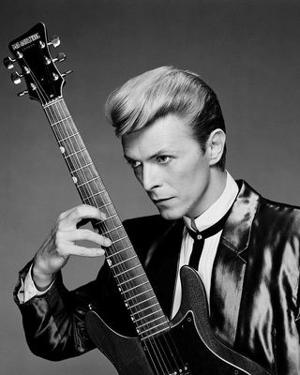
Reynolds did a remarkable job, striking a different pose for each of the work's three movements, dignified at all times but not without a puckish wit. I was put in mind of how someone like David Bowie could create unheard music in a still picture, like the unusual Hollywood-style portrait he had made for the Sound + Vision retrospective in the early 90's. It was not only a new look for Bowie, but it also seemed to refer to songs yet unwritten. 
Todd Reynolds, surrounded by the "silence" of 4'33"
Of course Cage, with his acknowledgement of the role of chance in his compositions, meant for us to pay attention to the sounds we do hear during 4'33", as no space is perfectly silent. In Titus Theater 1, two stories below West 53rd Street, there was plenty of listening to do. The periodic rumble of the subway was a lead "instrument," underpinned by the buzz of some electronics or lighting behind and to my left. There was a brief chorus of voices outside one of the fire exits, and the rhythm of my heart, which sped up for some reason during the first movement. It's not always easy to be in the moment, I guess. 

One brilliant way Cage dealt with that anxiety was to make it perfectly clear how long the piece will be. It went by surprisingly quickly, an appropriate appetizer for what was to follow. First up was After David Tudor (Homage To Fluorescent Sound), a tribute by Lang and Jody Elff to Tudor's composition for fluorescent lights, which can never be performed again. As Lang explained, not only is there no audio, video, or score, fluorescent lights have seen some improvements since 1964 and no longer make the humming and clicking sounds Tudor was amplifying. 

What they came up with was an assortment of fluorescent light fixtures, artfully arranged on the stage, and activated by Lang and Elff from a central console. Buzzing sounds of slightly different timbres began and ended, lights went on and off, my retinas got a workout. Sonically it had a slightly retro feel, which was appropriate, although I may have been the only one going all the way back to Franz Waxman's 1935 score for The Bride of Frankenstein, which featured some interesting "electricity" effects. It was a little unclear whether Lang and Elff were improvising or following some kind of plan, but there was a sense of build-up and finale as the piece came to a close. All told, it was a fun and affectionate acknowledgment of Tudor's pioneering work. 

Cage's Atlas Eclipticalis (1961), which "translates star charts into musical instructions," was up next and began without pause. Members of The New School's Ensemble 4'33", making their performing debut under Reynolds' direction, were arrayed around the perimeter of the room, giving us an immersive experience. The music, as fragmented as a pulverized mosaic, was made all the more satisfying for being the most melodic thing we had heard all night, even if the lights continued to buzz throughout.

The human ear seeks to organize sound, first by assigning a direction and source (bassoon at 3:00!), and then structure. There was none of the latter that I could discern until I realized that the atomization is the structure and relaxed into the randomness. Taken that way, Cage's conception is flawless and the performance could not have been better. The subtlety of some of the sounds, whether from electric guitar, percussion, cello or trumpet, was astonishing and quietly moving as the players coaxed it from their instruments. There is a great deal of flexibility in how this work is performed, and some recordings (James Levine, I'm looking at you) seem to conventionalize the music. I think I prefer Ensemble 4'33"'s approach, which seems somehow truer to Cage. I'm also sure I would hear more in a repeat performance, but I don't think it's in the stars.

You can watch the first night of the series, featuring music of Morton Feldman, Bryce Dessner, and others, here. The Rauschenberg show continues through September 17, 2017. 

You may also enjoy: 
BOAC At MMOCA: The Eno Has Landed
THE [KĀJ] ENSEMBLE’S 100 WALTZES FOR JOHN CAGE 
Pianos In Context
Bang-Up World Premieres

Tuesday, November 01, 2016

Record Roundup: Composed, Commemorated, And Beyond


Oceans of music are flowing in under, over, and around me. This is no last-gasp geyser, but rather the result of passionate musicians, composers, and labels pursuing musical bliss - and delivering it to us lucky listeners. In another attempt to stem the tide, here is a roundup of recent or upcoming releases in the realm of classical, contemporary and avant garde music.

Fantasias for Theremin and String Quartet - Carolina Eyck with American Contemporary Music Ensemble There are so many ideas and even theories behind this music - from how it was composed to fit an LP record, to the way the names of the pieces were chosen ("...by scanning multiple Scandinavian languages for pleasing lingual combinations...) - that I am reluctant to add more words about it to the world. Beyond "You must hear this!" that is, as it is an extraordinary album. I was aware of Eyck as a theremin virtuoso, but not as a composer. In this case, she wrote the string quartet music, sometimes sparkling, sometimes melancholy, always melodic, played here by Caroline Shaw, Ben Russell (violins), Caleb Burhans (viola), and Clarice Jensen (cello), and then improvised her theremin parts while listening to the recordings. You would never know that, however, so well does it all fit together, taking you on a seamless journey as only a well-sequenced album can. While some of the sounds she causes the theremin to emit did have my wife saying "Getting spooky!" there are almost no clichés to her use of this early electronic instrument. It often sounds like the human voice and, in fact, and I've never experienced the bass tones of the theremin as she plays them here. I strongly recommend you find a real stereo with which to listen to Fantasias. Kudos to producer Allen Farmelo for the technical wizardry and for the literate and fascinating liner notes, including thoughts on dragons and Derrida. This is one of the records of the year - and you can hear it live for the first time on November 4th.

Ice & Longboats - Ensemble Mare Balticum For more journeys in a Scandinavian vein, set sail with these meticulously researched (yet still speculative) performances of ancient music (1200-1582) from that region, on recreated instruments. It's highly atmospheric, sometimes hypnotic, and only the merest bit kitschy. Anyone making a movie or TV show about Vikings - here's your soundtrack.

Taylor Brook: Ecstatic Music - Tak Ensemble Based on Ice & Longboats, Vikings liked strange and dissonant sounds on occasion, which makes me think they would have liked some of this album. Brook likes to push the envelope, employing extended and techniques to produce music which never becomes quite familiar even upon repeated listens. The title track has a ritualistic, theatrical sound that is highly evocative, violin and percussion combining to sound like much more. The use of "microtonally tuned guitars" as drums probably helps in that regard. The sense of theater continues with Five Weather Reports, a song cycle with words from David Ohle's cult novel Motorman. Charlotte Mundy does a remarkable job with the vocals, switching from spoken word to soprano flights on a dime, all perfectly pitched, with command and humor. Mundy is also great with the vocalise of Amalgam, the last piece, but then all of the Tak Ensemble members show complete commitment to Brook's conception, turning in sympathetic performances (including using his guitar machine) that are further proof that it's a wonderful time to be writing challenging, original music. Let your ears be sympathetic as well, especially the first time you listen - the rewards of Ecstatic Music are many.

Garden of Diverging Paths - Mivos Quartet Taylor Brook's music also features on this album by Mivos, an adventurous group whom I discovered because of their gorgeous collaboration with vocalist Zola Jesus. Here they play three works based on the written word, starting with Brook's title piece, which is based on a short story by Borges and uses imaginary theories and histories to create music that sounds alien and ancient at once. Andrew Greenwald, who co-directs Ensemble Pamplemousse, contributes A Thing Is A Hole In A Thing It Is Not, a single movement of scratchy, scrapey and high-pitched sounds that somehow holds together. The title is from a remark by conceptual artist Carl Andre and keeps you guessing as much as the music does. Greenwald has also produced arrangements of this work for two cellos and even solo euphonium - check it out. The final work, Nadja, finds the Mivos joining forces with the composer, Kate Soper, who sings vocal parts drawn from Tennyson, Ovid, and Breton. Even in the quiet moments, this is fiercely engaging listening, and Soper is in fine form. This whole collection more than lives up to the "adventurous" tag I hung on the Mivos above. Now it's your turn to be adventurous and listen.

Ginastera: One Hundred - Yolanda Kondonassis, Oberlin Orchestra, et al If you're crying for more Argentina in your life after listening to the Borges-inspired piece on the Mivos album, have I got a record for you. As the title makes plain, Alberto Ginastera was born 100 years ago, which means he began composing at a critical time in the development of a distinctive Argentinian culture. The central tension between the rural (old) and urban (new) was an animating force in much of the music and art of the time and Ginastera rode the line in fine style. His Harp Concerto, performed here with extraordinary skill and feeling by Yolanda Kondonassis, is the definitive large-scale work for her instrument. Ginastera surrounds the harp's sparkle with colorful, wonderfully evocative melodies, harmonies and orchestration. One thing that makes the Concerto special is the way he both pushes the harp into new territory and exploits its familiar qualities perfectly. Kondonassis couldn't have asked for a better partner than the Oberlin Orchestra under the direction of Raphae Jiménez. Actually she did ask for it as she executive-produced the album. She must have a hell of a Rolodex, too, as the other works are performed by the likes of Gil Shaham, Orli Shaham, and Jason Vieaux, who are all the best at what they do. The Sonata for Guitar is a late work for Ginastera, composed in1976, seven years before he died. It seems to synthesize many of his ideas about the past informing the present and Vieaux's playing is preternaturally assured, dashing off the intricate work with the flair of a gaucho troubadour on horseback. The Shaham siblings acquit themselves nicely in the romantic and slightly jazzy Pampanea No. 1 and Orli digs into the cutting-edge virtuoso charms (two keys at once? We got that!) of Three Danzas Argentinas to close the album. Kondonassis has done a service to Ginastera's legacy with One Hundred and we are the  beneficiaries of her advocacy. I would say if you own one record of Ginastera it should be this one - however, I think you'll want more after hearing this. 

Simple Gifts - The Chamber Music Society of Lincoln Center As it happens, Ginastera studied with Aaron Copland on a Guggenheim fellowship in the 40's, learning much about how to push harmonies further while still keeping your music accessible. Appalachian Spring, Copland's score for a Martha Graham ballet, is Exhibit A for this approach, feeling as American as corn on the cob without being corny, thanks to its spare, modern design. This is much like the Shaker attitude towards design and architecture, which makes their furniture and buildings look so timeless and inviting. Of course, Copland's masterpiece has been recorded dozens of times, including a fairly definitive account conducted by the composer and recorded in glorious Living Stereo in the early 60's. But here we have what may be the best version yet. Marketers at Lincoln Center would like you to know that it was recorded live "in the heart of an authentic Shaker village," and filmed for broadcast on PBS. This is a first, apparently, and maybe it did inspire the musicians to new heights. The tempos are perfectly judged, the dew-limned opening notes flowing into one of the great slow builds in music, kept so taut that you're on the edge of your seat even if you've heard the work many times, and the full gallop is as thrilling as it should be. The sonics are delightful as well, with clear textures, a wide dynamic range, all the detail you could want - and no audience noise, not a cough or a creaking chair, intrudes. Until the end, that is, when the crowd explodes, seemingly fully aware that they had just heard something special. Due to my own particularities, the rest of the album, which includes short pieces by Louis Gottschalk, Samuel Barber, Dvorak, Mark O'Connor and Stephen Foster, is basically superfluous. Everything is performed brilliantly - the CMS is a band of virtuosos - and if you like the music you'll love this recording. I also loved reading the excellent liner notes and learning that Barber was a fan of Edie & Rack, the 1940's piano duo - I've never seen their names anywhere except on singles that I found in my grandmother's collection after she died. Perhaps she and the composer of Adagio for Strings crossed paths at the Blue Angel Club...but I digress. This is the Appalachian Spring to hear, so make a plan and get it done. That's the American way.

Restless - Ken Thomson If Copland is bit on the modern side for you - but you like it - here's a quick catapult into the 21st century, and I promise a painless flight. Throughout this album, composer Thomson displays a muscular approach to romanticism that is shorn of sentimentality - this is emotional music, but free of bathos or ornamentation. Restless, a four-movement work for cello and piano, sounded perfect the first time I heard it, as if it had always been there, but also very fresh. Think of your favorite room, and imagine it as it was when it was new - that's Restless, with the fourth movement being the dark corner you don't visit often. Part of its indomitability must be due to the spectacular playing of Ashley Bathgate (cello) and Karl Larson (piano), who sound like much more than a duo. Bathgate is a Bang On A Can luminary, so I would expect no less, but Larson is new to me, and it is he who is in the spotlight on side two (like Eyck's Fantasias, this was conceived as a vinyl album). Me Vs., a three movement work for solo piano, can be spikier and more fragmented than Restless but still feels inevitable and deeply involving. Thomson has done something very special here, and while these recordings and performances are already ideal, I hope to see both of these pieces enter the repertoire on record and in the concert hall. Think I'm blowing smoke? Come to Le Poisson Rouge on November 9th for the album release concert and hear for yourself.

Westside Industrial - M.O.T.H. Like most of the records discussed here, there is more than meets the ear to Westside Industrial. If you're interested, you can look into the conceptual framework in which the project is "a narrative response to the commodification of culture and the fallout that occurs when lifestyles are turned into brands in order to sell real estate." There is a performative aspect as well, using "handwritten journal entries, voicemail recordings, poetic dialogue and photographic imagery," framing a narrative. But here we just have the music, three long tracks of "nervous ambient" (my term), created using guitars, analog pedals, radio signals and other sound generators, making for seamless audio paintings. It's quite beautiful, and the details, especially when listening through headphones, are wonderfully textural. This is the second album by M.O.T.H., the nom de guerre of Matt Finch, with 3 Vignettes from 2015 being equally worthy of investigation. Between the two albums, M.O.T.H. should now be considered to a reliable brand name of it's own. Buy in.

As always, let me know what I'm missing, and keep up with the totality of 2016 here.

You may also enjoy:
BOAC At MMOCA: The Eno Has Landed
Record Roundup: Classical Composure
Cello For All, Part 1: Laura Metcalf
Cello For All, Part 2: Michael Nicolas


Saturday, August 08, 2015

A Pair From Plum


“Through the ear, we shall enter the invisibility of things.” - Edmond Jabes (French-Jewish Poet, 1912-1991)

Sarah Plum's new CD, Music For A New Century, which features two world premiere recordings, has actually been in the works for four years. It was in 2011 that she gave the first performance of Sidney Corbett's Yael for violin and orchestra. She had just released Absconditus, an album devoted to Corbett's work and knew that this new piece should be recorded as well. But paired with what? When the perfect choice failed to present itself, she took matters into her own hands and commissioned a new concerto from Christopher Adler, another young composer whose music she had championed.

Plum is a fine example of the activist performer, having commissioned nearly a dozen compositions in the last three years alone. Talk about being the change you wish to see - or in this case hear - in the world! Her hope, of course, is that the life of Corbett and Adler's music will not end here, but that others will take it up and make it part of the modern repertory. For that to happen the music must be of sufficient quality and her playing must be very convincing. Is that the case? Read on...

The first piece on Music For A New Century is Corbett's Yael, a work in four movements that takes inspiration from the writings of Edmond Jabes, specifically his work about Yael, a fairly obscure biblical figure known for killing an enemy general by hammering a tent peg through his temple. Corbett describes the music as a depiction of Yael wandering the "ruins of Judaic culture," but I'm not sure if that is before or after those dramatic events.

But you don't have to know any of that to feel the questing nature of the violin writing, and the tension in the melodies. Unlike the sometimes oppositional nature of the traditional concerto, the orchestra is often there to support what the violin is going through. Like a Greek chorus, the other instruments amplify the violin's oratory and provide commentary and illumination. Kudos to the Chamber Music Midwest Festival Orchestra and conductor Akira Mori for their sympathetic playing.

The first movement, Breath, has Plum tentatively emerging from the darkness, a melancholy wisp looking for signs of life. Winds and other strings gradually emerge, almost appearing the breathe alongside the violin. Pizzicato sounds delicately encircle the violin, providing a little sparkle but there is little respite from the almost exhausted sound world. An image of people waking from a drugged slumber with no idea of where they are or how they got there comes to mind, as the other instruments poke and prod with their questions.

The movement ends with gathering strength and then we're into The Dark, angular, fragmented, trying to marshall forces. For brief moments, the instruments take up a martial tone, driving forward, relentless but unsure. The triangle is a marvelous touch here. Dance rhythms are hinted at, the horns bleat, and then...steel drums! A most unusual, original touch, which works wonderfully, the bright metallic sounds finding the spaces between the strings. This moment also showcases the excellent production, which is warm and involving while still transparent and well-defined. 

The violin is alone again, mostly, at the start of Shirayael, the third movement. Single notes talk back and forth, seeming to be too devastated to create whole phrases. Then comes crescendo, horns and percussion raising a whirlwind of sound. But it does't last. Yael, or Plum, is alone again at the start of the fourth movement, called Archipelago. More questions, maybe the same ones, end this distinctive, quietly intense piece. 

Christopher Adler's Violin Concerto is quite a different thing, kicking off with Shift (The Knife Grinder), spiky and full of stop-start rhythms and clattering percussion. The call and response between soloist and orchestra is a little more traditional and the movement ends with what feels like a cadenza. The second movement, Verelloe, quietly spooky with low sounds from the harp, stands in for the adagio that often forms the middle movement of three. So, classical architecture then, but the steel and glass sheath is purely modern. Adler's writing here is very beautiful, but also unsettling, and he develops his ideas impressively in this long movement.

Verelloe grows darker as it nears its end, fading out before the start of Tektonika, the final movement. There's lots of drama here, with a wide dynamic range and some violence to the rhythms, especially in a Stravinskian herky-jerky section in the middle. San Diego New Music and conductor Nicholas Deyoe handily dispatch anything the composer throws at them. Adler counts Russian Suprematist painter Kazimir Malevich as an influence and you can hear it in the angles and sharp contrasts. The end of the movement, and the concerto, is pensive and lyrical at the same time, with a worried ostinato working behind the violin line, which eventually ascends on its own, seeking a hopeful future from a new perspective. 

Both Corbett and Adler are accomplished composers and each piece feels very complete. This is not difficult music but it is challenging on an emotional level and well worth the journey it takes you on. Each artist draws on something with great personal meaning for them but puts it in a context that allows anyone to find their place in the sounds. Plum's playing is exemplary throughout, with a level of comfort that allows you to concentrate on the music fully. Based on her performances, both works deserve to be heard and played widely. However, until the next brave soul schedules a performance we have these excellent recordings to enjoy.

Plum - busy as ever - also just released volume one of her traversal of Bela Bartok's music for violin and piano. Christopher Lovelace is her partner here and on this well-programmed collection they play the Romanian Folk Dances, Rhapsodies 1 and 2, Sonata No. 2, and three Hungarian Folk Tunes. There's a lot of playfulness to Bartok's writing and Plum's approach is very lighthearted on the whole. While I prefer the gutsier attack of, say, Peter Nagy or Isabelle Faust in this repertoire, Plum's take is perfectly valuable and I look forward to hearing Volume 2. 

These releases continue to establish Sarah Plum as a valuable presence in the world of music, new music especially. It's great to hear her making her mark with these two releases and I just hope I can keep up with her in the future!